

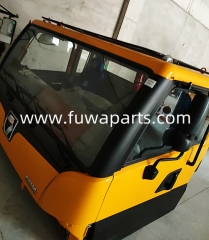
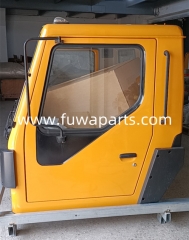
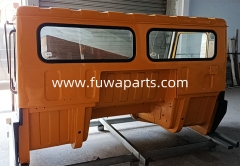
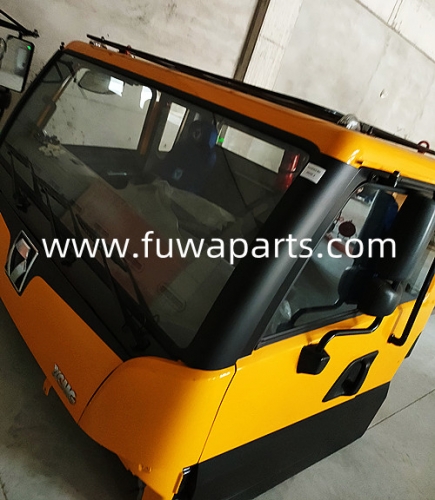


A truck crane's drive cab is the most exposed panel on the machine — first through the site gate, in the sun all day, and opened and shut on every shift. This is a complete replacement operator cabin for XCMG truck cranes, supplied as a glazed shell with the wiper, side mirror and door fittings in place. It suits a machine with cracked glass, a shell that has rusted or twisted, a door that no longer closes cleanly, or cab damage from a collision on site or on the road. We have handled construction machinery spare parts for Chinese-built cranes since 2017, and the cab is one of the few items where changing the whole assembly usually beats rebuilding it panel by panel.
Ordering the crane cab as one unit removes most of the guesswork. Instead of chasing a door skin, a pillar section and three separate glass panels from different sources and hoping they line up, you fit one assembly and put the machine back to work. How much of the interior — seat, controls, instruments — is transferred from the old cab and how much comes with the new one is agreed when we quote, so there is no surprise on fitting day.
Fleets, repair workshops and contractors use us as their XCMG truck crane parts supplier because the cab is quoted against the machine rather than against a photograph. Model, serial number and the mounting points decide what gets built, and when the plate has gone we work from your measurements or from a drawing of the original.

| Parameter | Details |
|---|---|
| Machine model | XCMG QY70 truck crane |
| Part type | Drive cab (operator cabin) |
| Material options | 35SiMn, 35SiMnMo, 28CrMnMo alloy steel |
| Condition | 100% new — no refurbished or used parts |
| Glazing | Front windshield, side glass and door glass |
| Fitted fittings | Windshield wiper, side mirror, exterior door handle |
| Seals | Rubber window and door seals |
| Finish | Painted shell with black pillar trim |
| Dimensions | Confirmed against your machine or drawing |
| Customisation | Drawing-based build to your sample or drawing |
| Application | Crane cabin replacement and workshop overhaul |
The glass is the part most often ruined by cleaning rather than by work. Wash the windshield and side windows with plenty of water and a soft cloth — wiping a dry pane that still has site grit on it leaves fine scratches that catch the low sun all day. Replace wiper blades as soon as they streak, and free a stiff wiper spindle before it strips the motor.
Door and window seals are the quiet failure. Perished rubber around the windshield or the door lets dust into the cabin, and once grit is inside the hinge line the door begins to drop. Run a hand around the seals at every service and change them before the cabin starts taking water.
The lower sill and the bottom of the door are where rust begins, especially on machines that work near the coast or are washed down after every shift. Touch up stone chips while they are still chips, and keep the drain holes in the door clear.
When a fitting does fail, replace it rather than live with it. The wiper, mirror, glass and door hardware are the crane spare parts that fail first on a drive cab. Each is ordered the way crane sheaves and other spares are — from the machine details, not from a picture.

Paint is the one detail on a crane cabin order that can be settled completely before anything is built, and it is the detail most often left until the shell has already shipped. Raise it at quotation and it is written into the specification; raise it after dispatch and the only choices left are to accept what was made or repaint a brand-new cab in your own workshop. Colour is one of the few points on an order of heavy equipment spare parts that costs nothing to decide early and a great deal to fix late.
Send the code first. The quickest route is the paint reference your fleet already uses — the machine manufacturer's code, or a RAL equivalent if your workshop mixes its own. Send it together with the machine model and serial number, and it goes into the written specification that comes back to you for approval before the build starts.
If the code has been lost, send something physical. A painted panel from the old cab, a door skin or a small cover plate tells us more than any photograph, because camera colour shifts with daylight and with the screen it is viewed on. Use a photo only as a second reference alongside a sample, never on its own.
Match the fleet, not the faded panel. A cab that has stood in the sun for years has already changed colour, and a shell built to that panel will look darker than every other unit in the yard. If several machines run one livery, say so when you enquire: cabins ordered months apart are then matched to a single reference instead of to whichever old cab happened to be photographed first.
Trim, lettering and local repainting. Black pillar trim is fitted whatever colour the shell is painted, so there is nothing to specify there. Where lettering, stripes or a company logo sit on the door or the front panel, tell us before the build so the layout is agreed on the drawing. Fleets that repaint to their own workshop standard after delivery should say so at enquiry — it changes what finish is needed on the shell, and it is much easier to arrange before dispatch than afterwards.
What we will not do is promise a colour match on the strength of a description. The finish is confirmed in writing against a code or a physical sample, and it is confirmed before the cab goes into build. If the reference cannot be established from what you send, we will say so plainly rather than guess — an unmatched cab is a minor delay next to a cabin that arrives in the wrong shade and has to be repainted. The same confirmation applies to any XCMG truck crane parts order where finish matters, including glass, wiper and mirror items added to the cab.

Not sure which part fits your machine? Send the part number, the machine model, and a photo of the nameplate or the worn item, and our engineers — each with more than ten years in the construction machinery business — will confirm the correct reference and quote it. We advise on installation, help trace faults, and answer technical questions before and after dispatch. Since 2017 we have built this support on a supplier network covering FUWA, SANY, XCMG and ZOOMLION, so older and hard-to-find references can usually still be sourced.
Yes. Send the machine model, the serial number if it is still readable, or measurements taken off the old part, and we will match it or have it made. Out-of-production machines are routine work here: undercarriage parts for crawlers that the original brand no longer supports come through the same supplier network we buy from for current models. Crane sheaves, structural items and cab fittings for older cranes follow exactly the same route.
Give us the brand, the machine model and the serial number, and our engineers check the specification against the reference before anything is quoted. On a cab, a photo of the nameplate together with the door opening and the mounting points removes almost all of the doubt. A cab sits at the top end of what a fleet buys in heavy equipment spare parts, so we would rather spend a day confirming than send a cabin that does not line up.
The cab arrives glazed, with the windshield wiper and the side mirror fitted and the door hung on its hinges with its exterior handle. Seals and trim go on with the glass, so the cabin is closed against dust and rain from the day it is fitted. If only the glazing or a single fitting is needed, those parts of the crane cabin can be quoted on their own — say which ones when you send the enquiry.
The shell is supplied painted, with black pillar trim. Paint is not a fixed catalogue of colours, so the practical route is to send the code or a panel from the machine it has to match and let us confirm the closest match before the build starts. If the whole fleet runs in one colour, settle it at quotation rather than after delivery.
If the glass, the wiper, the mirror or the door handle is the only problem, order that item — single crane spare parts like these are quoted off the model number and are the cheapest way to keep the machine working. The cabin itself is the right call when the shell has rusted through, when the pillars or the mounting points have shifted after an impact, or when the door frame no longer lines up with the glass. Once the structure has moved, new panels rarely bring a cabin back.


