


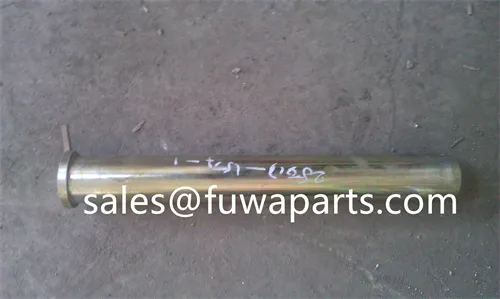
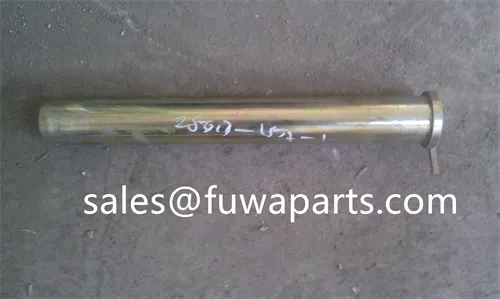
When a lattice boom is pinned together, the whole joint depends on a handful of steel pins that nobody notices until one of them is worn. This basic main boom pin axle is the replacement pin for the main boom joint on this SANY crawler crane, supplied to part reference 21006503 and drawing reference Q250.60.6.1. It is a solid machined pin with a flanged head at one end and a small locating tab on the shaft, so it seats in the boom lug the same way the original did and works with the same retaining arrangement.
Workshops order it in two situations: a planned boom inspection that finds the pin worn, oval or corroded, and a repair after a joint has been opened and the old pin came out damaged. Either way it arrives new — not reconditioned, and not pulled from a scrapped machine.
Our catalogue is built around crawler crane parts for SANY, ZOOMLION, XCMG and FUWA machines, so this pin is not an isolated item on a shelf. If a boom joint is being rebuilt, the bushing, the retainer and the surrounding boom sections can be quoted and shipped on the same order.
The same range covers the everyday service side of the machine as well, from sany filters and seal kits through to undercarriage. If a boom repair turns into a full service window, tell us the machine and the job and we will put the whole list together in one shipment.
The pin is machined from alloy steel and heat treated. The grades we work in for structural parts of this kind are 35SiMn, 35SiMnMo and 28CrMnMo — steels chosen for crane pins because they hold tensile strength while still absorbing the shock that goes through a boom joint every time a load comes on and off the hook. The exact grade for this reference is set by the joint drawing and confirmed before machining, not picked to suit a price.
The shaft, the flange and the small locating tab are formed from one piece. That detail matters more than it looks: a boom pin is driven in and out with a drift, and a welded-on tab would be a crack starter on a part that gets hammered.
The visible finish is a yellow zinc plating over the machined steel. It carries the pin through storage, packing and sea freight without surface rust, which is why a spare can sit in a site container for months and still go in cleanly. The white label on the shaft carries the reference, and that is what a workshop needs once the packaging is off and three similar pins are lying on the bench.
As with the rest of our construction machinery spare parts, the critical dimensions are checked against the reference before dispatch. It is the same standard we hold the crane boom parts around it to: bushings, link panels and retaining hardware are all specified against the joint they belong to.
If the machine works in a coastal yard, a salt-heavy environment or a cold climate, say so when you enquire — we will confirm the grade and finish against the joint reference rather than assume the standard one is right.
| Part number | 21006503 |
| Drawing reference | Q250.60.6.1 |
| Machine | SANY SCC1500C crawler crane |
| Position | Basic main boom joint |
| Part type | Boom pin axle |
| Condition | New, not reconditioned or used |
| Material | Alloy steel — 35SiMn, 35SiMnMo or 28CrMnMo to the joint reference |
| Finish | Yellow zinc plated |
| Form | Solid pin, cylindrical shaft, flanged head, locating tab |
| Marking | Part reference on the shaft label |
| Minimum order | 1 piece |
| Payment | T/T; Western Union, or as agreed |
| Lead time | Most parts in stock; usually 7–20 days, according to the quantity |
| Shipping terms | EXW, FOB, CFR, CIF |
| Port of loading | Shanghai, Dalian, etc. |
| Warranty | 2500 working hours or one year |
| Packing | Plywood box, export packed |
| Rush handling | Priority and air freight options on request for critical repairs |
| Volume orders | Pricing on request for multi-piece and fleet orders |
Not sure which part fits your machine? Send the part number, the machine model, and a photo of the nameplate or the worn item, and our engineers — each with more than ten years in the construction machinery business — will confirm the correct reference and quote it. We advise on installation, help trace faults, and answer technical questions before and after dispatch. Since 2017 we have built this support on a supplier network covering FUWA, SANY, XCMG and ZOOMLION, so older and hard-to-find references can usually still be sourced.
Age is rarely the obstacle — the reference is. Buyers often reach us after other crane parts suppliers have told them an older part is no longer available. Send the crane model, the serial number and a photo of the worn component; we work with sany crane parts every week across SANY, ZOOMLION, XCMG and FUWA machines, and can usually match a legacy reference from stock or have it made to a drawing.
Work from the number on the old part. Give us that reference, the crane model and the serial number, plus a photo of the pin in place. Crawler crane parts change across build years, and the serial number is what lets our engineers confirm the joint rather than guess from the model alone. When the reference and the measurements agree, you have a confirmed match rather than a hopeful one.
Alloy steel — 35SiMn, 35SiMnMo or 28CrMnMo — heat treated to the joint reference. Harder is not automatically better: a pin with too hard a surface can become brittle and crack instead of wearing, which is the last thing you want at a boom joint. As with any construction machinery spare parts order, the grade and treatment are matched to the part rather than chosen for price.
Look for a bright wear ring where the pin runs in the bushing, fretting and rust staining around the flange, or any rock in the joint with the boom unloaded. A pin that has taken a shock load is worth checking regardless of hours. Most crane spare parts decisions come down to an inspection like this, and fleets that hold heavy equipment spare parts as standing stock rarely wait on one.
Check the bushing in the lug and the retainer before the boom goes back together. If the bore is worn, a new pin will feel loose from the first lift. We can send bushings and retainers with the pin, and if the machine is also due for a service, sany filters or a seal kit can go into the same shipment so everything arrives together.
Yellow zinc plating over the machined steel. It is a transport and storage finish, not a working surface — once the joint is in use, the plating at the bearing area polishes away. Keep the pin in its packing until it is needed. Crane boom parts that stay boxed and off wet ground go in cleanly even after months on site.
No. The basic main boom joint, the jib and the boom foot each take their own pin, and the references differ even where the parts look almost identical. Fitting the wrong one is one of the most common mix-ups on construction machinery spare parts orders, and an expensive one once a pin is in a bore it does not belong in. Match by reference every time.
Measure it and photograph it. Rest the old pin on a clean surface beside a rule, shoot the head, the shaft and the locating tab, then note the shaft diameter and the overall length. Send those with the crane model and serial number. A pin with no legible number still gets a firm answer that way, and it is how careful crane parts suppliers confirm a match instead of guessing.


