Product Overview
An angle sensor tells a crane how far its boom is from horizontal. Through a lift the reading changes continuously, and the load system uses it together with boom length to establish working radius — the figure that decides how much the machine may pick up. The same measurement principle watches mast inclination on a rotary drilling rig, where geometry matters just as much before the rig can be worked safely.
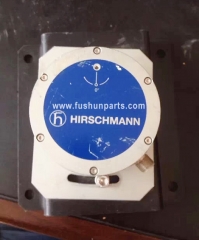
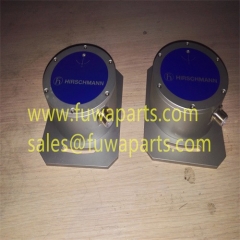
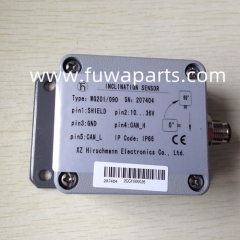
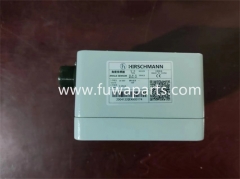
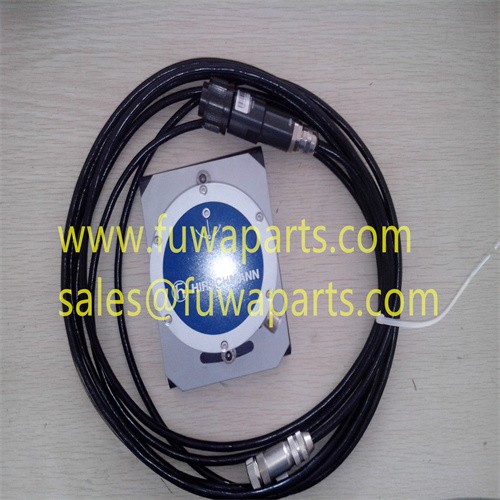
The Hirschmann units we supply cover five references — WGC180, WG103, WG104, WGC090 and LWG208 — fitted to FUWA, XCMG and ZOOMLION cranes. Each is a sealed metal body on a bolted mounting plate, with a marked reference position on its faceplate and the type and serial number printed on the label, which is what lets a replacement be identified from the part in front of you rather than from a catalogue guess.
We supply these to workshops and fleet owners who need one unit to get a machine back to work, and to distributors restocking a shelf. A crane's safety circuit is not a place to experiment, so units go out new and tested, matched to the machine before they are packed. If you already buy other construction machinery spare parts from us, the sensor travels in the same crate as the rest of the order.
Role in the Load System
- Angle becomes radius. The load system pairs the boom angle with boom length to calculate working radius, and radius is the figure that picks a capacity off the load chart. A reading that is two degrees out is a capacity calculation that is out.
- Feeding the crane load indicator. The angle value is one of the inputs the display and the limiter work from, which is why the quality of this single reading affects every capacity decision made with the machine that day.
- Limiting, not just warning. Once the rated capacity is approached the system slows or stops the movements that would increase the load moment, so a trustworthy angle signal directly changes how the machine behaves in the hands of the operator.
- Stable beats fine. A repeatable reading matters more than a very fine resolution. A sensor that drifts shows up as a capacity figure that keeps changing while the boom is stationary, and operators quickly learn to distrust a display that does that.
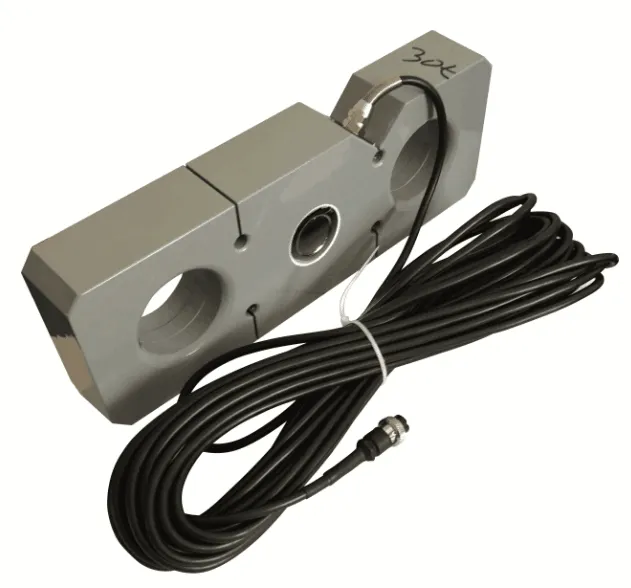
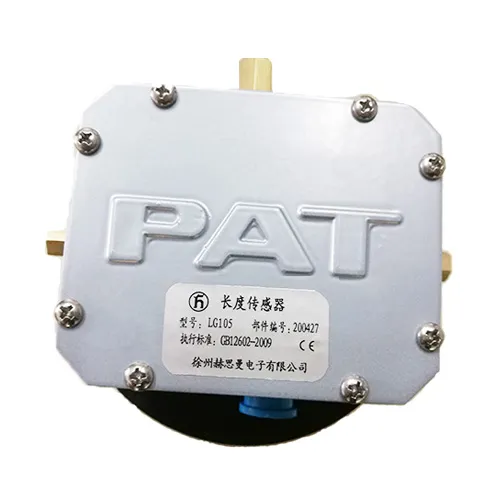
- Shared loom. These are crane electrical components in the fullest sense: the plug sits on a loom shared with the load cell, length sensor, wind speed sensor and display, so a chafed wire or a corroded pin can imitate a failed sensor convincingly.
- Telescopic machines. The same principle covers the mobile crane parts we supply for telescopic booms: angle plus extension gives radius, and the display shows both as the boom is extended or retracted.
Model Reference
| Model reference |
Description |
| WGC180 |
Hirschmann angle sensor listed for FUWA, XCMG and ZOOMLION cranes |
| WG103 |
Angle sensor reference in the same Hirschmann group |
| WG104 |
Angle sensor reference in the same group |
| WGC090 |
Angle sensor reference in the same group |
| LWG208 |
Hirschmann reference grouped with these angle sensors |
| Brand |
Hirschmann |
| Measurement |
Boom angle and inclination relative to horizontal |
| Mounting |
Bolted mounting plate with a reference mark on the faceplate |
| Connection |
Multi-pin plug on a lead, pin assignment marked on the housing |
Matching a Replacement
- Read the faceplate before anything else. The label on the front of the old unit carries the type number, the serial number and the pin assignment; the type number is what decides which reference you need.
- Write down the machine. Brand, model, serial number and year of build all matter, because a FUWA, an XCMG and a ZOOMLION machine each have their own bracket and plug arrangement even where the sensor body looks the same.
- Photograph three things: the faceplate, the plug on the end of the lead with the pins visible, and the bracket with the unit still bolted in place. Photographs settle most fitment questions faster than any description.
- Send them to us. As crane parts suppliers we check the reference against the machine and confirm it in writing before anything is packed, so an expensive mistake is caught at the desk rather than at the port.
- Check the plug, not just the part number. Plug body, keyway and pin count are all part of the crane electrical components you are replacing, and a connector changed during an earlier repair is the most common reason a correct sensor will not plug in.
- Older machine with a reference that is no longer listed? Say so. We will propose a current unit and then work through the bracket and wiring differences with you before you commit to anything.
- Keep the old unit until the new one is calibrated. Fit the replacement with the machine isolated, run it through a full boom cycle, and only then retire the original — a known-good reference is worth keeping in the workshop.
Machine Applications
Lattice boom crawler cranes are where most of these units end up: bridge, port and mining work where the boom angle changes with every lift and the operator reads the display to know where the capacity line sits. The angle sensor is one of the crawler crane parts that fail quietly — no noise, no leak, no visible damage, just a reading that gradually stops matching the boom.
Telescopic cranes use the same measurement alongside the length sensor, and on a rotary drilling rig the equivalent unit watches the mast rather than a boom. Piling rigs and attachments hung from a boom depend on the same signal, and a rig that has lost its inclination reading is as grounded as a crane that has lost its angle.
The working conditions are the same across all of them: dust, vibration, pressure washing and a temperature swing from a cold morning start to a baking afternoon on site. That is the environment these housings are built for, and it explains why a unit that has served for years can fail without anything obviously breaking.
Fault Symptoms and Service Support
- Reading frozen or jumping. If the displayed angle stays flat while the boom moves, or steps in jumps, suspect the plug and cable first — a corroded pin produces exactly this pattern and costs far less to fix.
- Faults after washing or rain. Water in the connector shows as an intermittent reading that clears as the machine warms up. Dry the plug, check the seal and re-test before condemning the sensor.
- Angle right, radius wrong. The angle is only one input. A radius that disagrees with the boom points at the length sensor or the machine setup rather than at this unit.
- Boom that will not hold. Uneven lowering or a boom that settles under load belongs to a holding valve or cylinder in the hydraulic crane parts; a new angle sensor will not change the movement, although a wrong angle reading will keep the machine derated while you repair it.
- Remote diagnosis. Send the error code, the displayed angle at two known boom positions and a photograph of the plug, and our engineers will tell you whether the unit is at fault or the loom is.
- Repair rather than replace. Faulty units can come back to us for repair; we assess the fault, quote the work and return the unit. Turnaround depends on what the unit actually needs.
- On-site support. For FUWA, SANY, XCMG and ZOOMLION machines our electrical engineers can attend installation, calibration and troubleshooting where travel is practical.
- Straight answers. As crane parts suppliers we would rather tell you the sensor is fine and the fault lies elsewhere than sell you a unit you do not need — the next order matters more than this one.
- Small and urgent. Sensors belong with the small crane spare parts a workshop keeps within reach: light, easy to courier and simple to add to a shipment that is already going out when a machine is standing.
Upgrading an Older Machine
- Start with the machine, not the part. Tell us the brand, model and year of build, what the display is doing now, and what has already been changed on the electrical system.
- Check what is still original. Many of the crawler crane parts we are asked to match are still the factory unit, and the reference printed on the label is the right one to quote; where a reference has been superseded we cross it to the current equivalent.
- On telescopic machines the picture is often muddier — the mobile crane parts that fail first are usually in the cab or on the boom, and a display fault can look exactly like an angle fault until the plug has been checked.
- Expect the electrical side to be dealt with last. On most older machines the hydraulic crane parts and the undercarriage are renewed first because their failures are visible, and the safety system waits until it faults.
- Plan the mounting as well as the electronics. A replacement has to sit in the same relationship to the boom pivot as the original, so the bracket and any linkage are settled before the unit is packed.
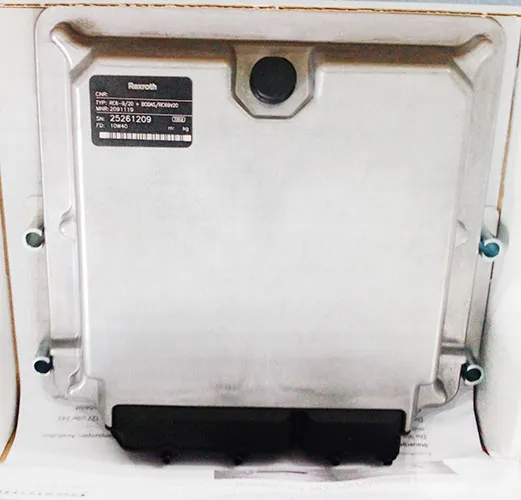
- Decide the scope. A single sensor swap is the smallest job; refreshing the display, wiring loom or controller is a larger one, and each part is quoted separately so the work can be staged across shutdowns.
- Record what was fitted — reference, date and the zero point set at commissioning. It shortens the next diagnosis and tells the next technician what has already been tried.
Ordering and Delivery
| Item |
Detail |
| Minimum order |
1 piece |
| Payment |
T/T; Western Union or as agreed |
| Lead time |
Most parts in stock. Usually need 7-20 days, according to the quantity. |
| Port of loading |
Shanghai, Dalian, etc. |
| Trade terms |
EXW, FOB, CFR, CIF |
| Warranty |
2500 working hours or one year |
| Packing |
Secure plywood crates, export packed |
| Condition |
100% new, factory tested |
| Range |
Construction machinery spare parts for FUWA, SANY, XCMG and ZOOMLION |
Zeroing and Calibration
- A tested unit is not a zeroed unit. Every sensor leaves us new and factory tested, but the zero position belongs to the machine it is bolted to, not to the sensor. A unit that was perfect on the test bench will still report the wrong angle on your boom until it has been zeroed, so plan a calibration slot in the same shutdown as the swap rather than leaving it for the next service.
- Fit and plug with the power off. Isolate the machine, bolt the replacement onto the existing bracket using the original hole positions, connect the keyed plug, and only then restore power. The pin assignment is marked on the housing and the plug only engages one way — forcing it is the quickest way to ruin a good sensor before it has read anything.
- The bracket is part of the zero. The mounting face and the reference mark on the faceplate together define the datum. A bent bracket, a burred mounting face, or a unit bolted on roughly where the old one sat starts every reading with an offset that no display adjustment can remove. Clean the face, check it is flat, and tighten the bolts before touching the electronics.
- Zero on level ground and through the display. Stand the machine on firm, level ground with tracks or outriggers settled, bring the boom to the position the machine manual nominates for the zero point, and run the manufacturer's zero routine on the load indicator or display. Leave the sensor sitting on its reference mark; turning the body to chase a number moves the error into the bracket and leaves the next replacement with no datum to work from.
- Check two further angles before signing off. After zeroing, take the boom to two more positions where the true angle is known and compare each against the display. Agreement at zero but a widening gap higher up supports supply voltage, a damaged lead or a failing unit rather than to a poor zero.
- Finish on radius, not just angle. The job is complete only when the radius figure matches a measured distance at the same boom position, because angle, boom length and machine setup all feed that number. If the angle reads correctly and the radius does not, the sensor is doing its job and the fault lies elsewhere in the system.
- If the zero will not hold, test the loom before condemning the part. With the display live, flex the cable at the plug and watch for the reading to jump, then check the earth and the supply at the connector. A unit that still will not hold zero after that is worth discussing with us before another is ordered — send the readings at the two check angles and we will compare them against what the unit should be doing.
Technical Support & Model Matching
Not sure which part matches your machine? Send us the model, serial number and the original part number — or a photo and key dimensions — and our engineers will confirm the correct item and check availability before you commit. They have spent more than ten years in construction machinery and can talk you through fault-finding, installation and commissioning by phone, email or video. We also trace parts for discontinued and legacy models. Support runs 24/7 from Shenyang, China, where we have been supplying buyers since 2017.
FAQ
Which of the references do I need?
Start with the type number printed on the faceplate of the unit you are replacing; that label decides which reference applies, and it is more reliable than the machine model alone because an earlier repair may already have changed the unit. If the label is worn, send a photograph of the faceplate, the plug and the mounting bracket together with the machine model and serial number. The same identification routine covers the other construction machinery spare parts we supply for these machines.
How do I know the plug will match?
The pin assignment is marked on the housing, and what actually has to match is the plug body, the keyway and the number of pins. Photograph the connector with the pins visible and we will compare it against the unit we intend to send before it is packed. Most fitment problems on crane electrical components trace back to a connector that was changed during an earlier repair rather than to the sensor itself.
Will it fit my crawler crane?
If the machine is a FUWA, XCMG or ZOOMLION crawler, one of the references we hold will almost certainly cover it. Crawler crane parts vary by boom section and by the age of the electrical system, though, so we confirm from the label and the serial number rather than from the model name. A photograph of the installed unit settles it quickly.
Does it suit a telescopic mobile crane?
Yes. On a telescopic boom this unit supplies the angle while the length sensor supplies the extension, and together they give the radius the display shows. Send the model and year of the machine for the mobile crane parts you are working on and we will confirm the reference and how it mounts.
How does the sensor feed the crane load indicator?
The unit reports boom angle, the system combines that with boom length to calculate working radius, and the radius is read against the load chart. The crane load indicator and limiter then warn, and restrict if necessary, as the rated capacity is approached. Because the angle feeds a calculation rather than a gauge, a small error in the reading becomes a real error in capacity.
Should we keep one on the shelf?
Fleets running several cranes of the same family usually keep one unit per family in the workshop, because failures never arrive at a convenient moment and the machine stays out of service until it is replaced. Keep it in its packing in a dry place and leave the label legible. If you already order crane spare parts, adding a sensor to an existing shipment costs very little in freight.
Is the angle sensor an electrical part or a hydraulic part?
It is electrical, and it fails like an electrical part: a number that is wrong, frozen or missing rather than a machine that will not move. Hydraulic trouble announces itself differently — a boom that will not hold, a function that is slow from cold, pressure that will not build. If the symptom is movement, look at the hydraulic crane parts first; if the display disagrees with the boom, start at the sensor and its plug.
What happens if the angle signal drops out during a lift?
The crane load indicator flags a fault and the system stops trusting the radius calculation, which in practice means the machine is restricted rather than left free to lift. That is why the plug, the cable and the earth connection are worth checking before a small fault turns into a stoppage half way through a shift.