



This Hirschmann angle sensor reads boom angle on crawler cranes, mobile cranes and rotary drilling rigs and passes that value to the machine's load moment indicator. It is a small item on a long construction machinery spare parts list, but when it stops reporting, the machine stops lifting. The working range is 0–180°, enough to cover a boom from fully lowered to fully raised, and the unit measures across 0–360° at a resolution of 0.05°, so a slow movement still registers as a change.
Power comes from 9 to 36 VDC, which covers both 12 V and 24 V systems, and the operating range runs from −40 °C to +85 °C. That spread matters on a machine that starts before dawn in winter and sits in the sun all summer: the angle input should not be the first thing to become unreliable. The housing is aluminium, and the unit is CE certified to EN 61000-6-2 for immunity and EN 61000-6-4 for emissions — the standards that decide whether it behaves with welders, radios and alternators working nearby. Because it is one of the crane electrical components rather than a mechanical linkage, the reading comes from the electronics rather than from a sliding contact.
Most orders are straight replacements after a failure. A sensor that drifts, sticks on one value or drops off the bus will hold up a lift, and the quickest way back is a unit that matches the one already on the boom rather than a re-engineered installation. Nothing on the hydraulic crane parts side has to be touched, no hose has to be broken, and the machine goes back to work on the wiring it came in with.
Buyers are usually keeping a working fleet running: fleet maintenance managers, independent crane workshops and regional distributors who hold crawler crane parts for the brands they serve. Some are chasing a fault in the middle of a shutdown; others are refreshing an ageing safety system and want the angle input to be the dependable part of it.
As crane parts suppliers we would rather check a photo of your old unit than let you guess between two similar builds. A few minutes of matching beats a sensor that sits on the shelf because the connector was wrong.
| Working range | 0–180° |
| Supply voltage | 9–36 VDC |
| Signal output | CANopen |
| Measurement range | 0–360° |
| Angle resolution | 0.05° |
| Operating temperature | −40 °C to +85 °C |
| Housing material | Aluminium |
| EMC standards | EN 61000-6-2, EN 61000-6-4 |
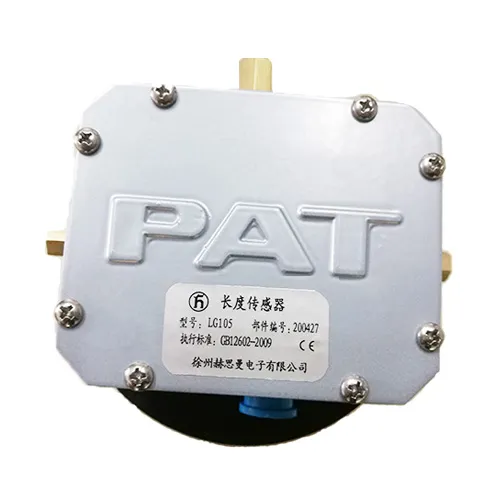
| Mounting | Circular faceplate on an octagonal plate, perimeter screws, lever at the lower edge |
| Condition | New, tested before dispatch |
A load moment indicator works from three live inputs: boom angle, boom length and the load on the hook. The controller compares them with the rated capacity curve for the current configuration and shows the operator what can still be lifted. The angle sensor supplies the first of those figures, and the crane load indicator uses it to work out the working radius and the safe load at that radius. An error at this input runs through every number downstream.
The unit sits where the boom hinges. On a crawler it is at the boom foot or on the luffing frame; on XCMG and ZOOMLION truck cranes it is one of the mobile crane parts that has to be right before the limiter will allow a lift, mounted at the boom pivot. The reading travels over the CANopen bus to the cab display and to the limiter, which is why a bus fault and a sensor fault can look identical to the operator.
Failures tend to announce themselves. The angle freezes at one value while the boom is moving, wanders a degree or two between shifts, jumps as the machine crosses rough ground, or the display raises an angle or communication fault and the limiter refuses the lift. A rubbed cable bundle, a corroded pin or water in a connector can produce exactly the same symptoms as a dead sensor, so walk the cable run before condemning the unit.
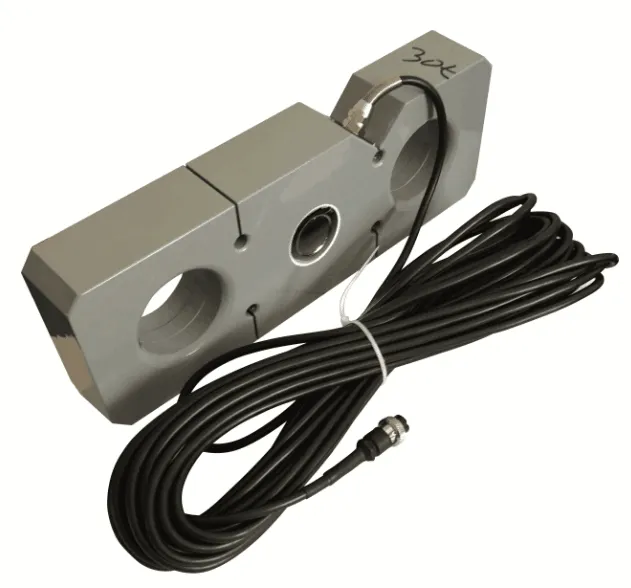
The other inputs deserve the same attention during a repair. If the load cell or the length sensor is also past its serviceable life, the system will keep faulting after the angle sensor has been changed, and a second shutdown costs more than the parts. That is why we ask what else is on the machine — one enquiry covering the whole set of crane electrical components usually proves more cost-effective than replacing them one at a time.


| Minimum order | 1 piece |
| Lead time | Most parts in stock; usually 7–20 days depending on quantity |
| Urgent orders | Tell your sales contact the machine is down and we will confirm the fastest dispatch available |
| Port of loading | Shanghai, Dalian and other ports |
| Trade terms | EXW, FOB, CFR, CIF |
| Payment | T/T; Western Union or as agreed |
| Packing | Secure plywood crates |
| Warranty | 2,500 working hours or one year |
| Warranty cover | Manufacturing defects; excludes incorrect installation, unauthorised modification and damage from extreme environments |
| Repair service | Faulty units can be returned for repair — confirm the current turnaround with your sales contact |
Not sure which part matches your machine? Send us the model, serial number and the original part number — or a photo and key dimensions — and our engineers will confirm the correct item and check availability before you commit. They have spent more than ten years in construction machinery and can talk you through fault-finding, installation and commissioning by phone, email or video. We also trace parts for discontinued and legacy models. Support runs 24/7 from Shenyang, China, where we have been supplying buyers since 2017.
It is fitted to FUWA crawler cranes, SANY rotary drilling rigs and XCMG and ZOOMLION machines, where it feeds boom angle to the load moment indicator. It appears on crawler crane parts lists for those machines in more than one build, so the label on the old unit or a photo of its faceplate is what confirms the correct one. If the label is unreadable, a photo of the mounting plate and the wiring plug does the same job.
A CANopen sensor talks to the controller over the machine's bus instead of sending an analogue voltage. The cable carries power and the bus pair, and the controller reads the angle as a digital value, so a slightly tired cable has less effect on the reading than it would on an analogue signal. Connector type, bus termination and node settings on the machine side still have to match, so tell us if the machine was previously fitted with a different type of angle sensor — that is the one case where the wiring needs checking before a unit is ordered.
The sensor resolves 0.05°, which is finer than any capacity chart needs; what decides accuracy on the machine is the calibration, not the resolution. Once the reference is set correctly in the controller and checked against an inclinometer at two boom positions, the reading should repeat every time the boom returns to that angle. If it does not, the plate or the lever is usually shifting slightly rather than the electronics drifting.
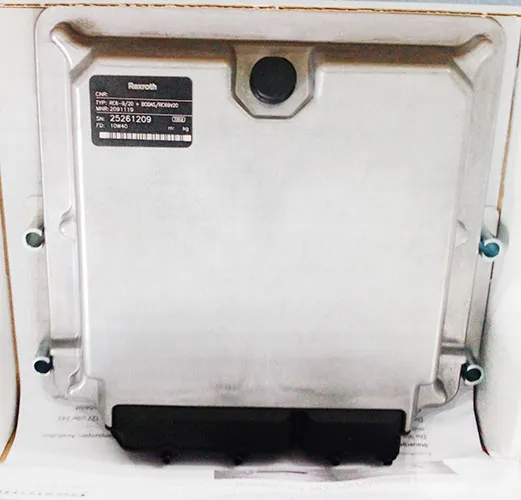
Often, yes. Older safety systems are usually brought up by fitting a current sensor and making sure the controller and display can read it; where the machine uses an early bus or a different signal type, the surrounding parts have to change as well, not just the sensor. On equipment that has been out of production for years, construction machinery spare parts for the original build are frequently gone, so the work becomes finding a current equivalent. Send photos of the old unit and the controller, and we will say what is involved before anything is ordered.
Look at how the reading behaves. A sensor that has failed usually gives a fixed value, a value that jumps regardless of boom movement, or no value at all with a communication fault on the display. A wiring problem more often shows as an intermittent fault that appears when the boom passes a particular angle or when the machine is on rough ground. Check the connector pins and the cable run first — replacing crane electrical components on a guess gets expensive, and the cable is the cheaper thing to rule out.
No. The crane load indicator needs angle, boom length and load together; the angle sensor supplies only the first of the three. That is why one faulty input can shut the whole system down, and why it is worth checking the other two while the boom is accessible — a load cell or length sensor that is nearly failing will cause a second stoppage soon after the first repair.
The supply range is 9–36 VDC, so both are covered, along with the voltage swings that come with cranking and heavy electrical loads. The operating range is −40 °C to +85 °C, which keeps the unit inside specification on a cold start and on a hot deck in summer.


