Product Overview
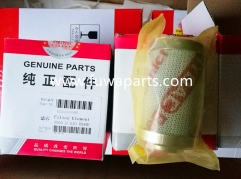
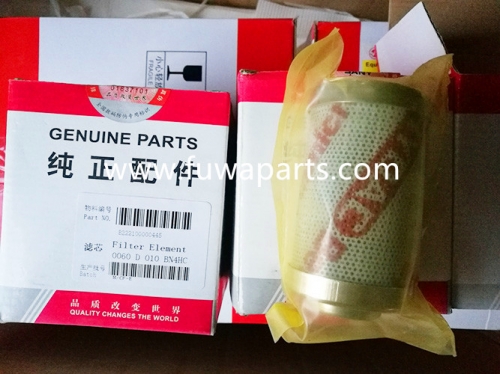
A cartridge filter element for SANY cranes and rotary drilling rigs, supplied as a genuine SANY part in its printed genuine-parts box. Inside is a pleated filter pack held in a metal mesh outer sleeve: the pleats give captured dirt somewhere to sit, the mesh keeps the pack from swelling or collapsing when cold oil hits it at start-up, and the end caps seat against the housing exactly as the old element did. Fitment is a straight swap once the number on the label matches — no adapter, no sealant, no modification.
In practice it belongs to the service schedule. Fleet maintenance teams order it with the rest of the crane spare parts for a machine that is due, workshops order one or two for a unit that has come in for repair, and an owner-operator orders exactly what the parts book lists. The job itself takes minutes: isolate, drain, pull the old element, wipe the housing, fit the new one, reset the restriction indicator, write it in the log. What comes out tells you a lot — heavy black sludge, metallic sparkle or a collapsed pleat pack are reasons to look upstream at the oil and the breather, not just to fit another filter.
Every unit is new, never washed or re-cored, and stays wrapped until the moment it goes in. It suits machines worked hard in dust — earthmoving, piling, port handling, quarry work — where the element is doing the most work and a restricted circuit costs downtime rather than the price of a filter.
Key Features
- Genuine SANY part. Bought through SANY's own parts channel rather than matched from a generic list — the same sourcing standard we hold every crane boom parts and undercarriage item to, and the reason the media grade, pleat spacing and seal dimensions are the ones the machine was designed around.
- Pleated media in a metal mesh sleeve. The mesh carries the pressure load at cold start and keeps the pleat pack from ballooning; the pleats hold the dirt instead of letting it through.
- Cylindrical cartridge, straight swap. It seats on the original sealing face with no adapter and no sealant, which is what keeps a routine crawler crane parts job down to a few minutes on site.
- 100% new, never reconditioned. Washed and re-cored elements are a known trap in heavy equipment spare parts; nothing in this box has been inside a machine before.
- Wrapped until the moment it is fitted. The element stays sealed in its printed box — a filter that picks up workshop dust before installation is already part-used.
- One line in a much larger range. The same warehouse carries repair kits, seal kits and most other construction machinery spare parts a service interval needs, so a single order can cover the whole job.
Part Number & Fit Verification
- Read the label on the old element before it goes in the bin — the whole line, not the first block. Printing on construction machinery spare parts fades faster than you would expect, and the middle group is exactly the part that goes first.
- Note the model and serial number from the machine plate. Build year matters here as much as the model name: the same crawler crane parts list can carry two different element numbers across one production run.
- Measure the old element if the label is gone — overall length, outer diameter, inner diameter and the type of seal at the end. Four figures like that turn an unidentifiable filter into a straightforward match, and the same method works for hydraulic crane parts whose plate is no longer readable.
- Look at the housing while the element is out. A hardened or cut seal, a broken spring or a bypass that will not seat will undo a new element within hours, so replace the seal at the same time if it comes off with the old part.
- Send the model, serial number and what you have to our team. We check it against the element on the shelf and confirm the crane spare parts order before it is placed, not after it lands.
- If that number is no longer in production, say so on the enquiry. As crane parts suppliers we can often match an element by dimension across the filters we hold for SANY, XCMG, ZOOMLION and FUWA.
Specifications
| Part number |
0060 D BN4HC |
| Product type |
Cartridge filter element |
| Brand |
SANY genuine parts |
| Material |
Pleated filter media with a metal mesh outer sleeve |
| Outer sleeve |
Metal mesh, protects the pleat pack |
| Form |
Cylindrical cartridge |
| End caps |
Seat on the original sealing face, no adapter or sealant |
| Condition |
100% new, never washed or re-cored |
| Packaging |
Carton, element wrapped inside |
| Application |
SANY cranes and rotary drilling rigs |
| Fitment |
Machines whose parts book lists this number |
| Origin |
China |
| Warranty |
2500 working hours or one year — confirm against your own order |
Replacement Timing & Warning Signs
The element is a consumable, and the lowest-cost policy is the boring one: change it with the oil at the interval your parts book sets, not when the machine starts behaving badly. A loaded element rarely fails on its own. It opens its bypass, the circuit runs on unfiltered oil, and the damage turns up weeks later in a pump.
There are still signs worth acting on before the schedule comes round. If the machine has a restriction indicator and it sits in the red, that is the element asking to be changed. So are boom or travel functions that have gone lazy on a warm machine, oil temperature that has crept upwards, and a pump whine that appeared after the last service. Any repair that opened the circuit counts as well — a hose burst, a cylinder change, a pump swap — because the first few hours after reassembly are when fresh contamination is at its worst, and a second element change shortly afterwards costs very little.
Two situations catch people out. The first is a used crawler crane that has just joined the fleet: service history is patchy at most, so change every filter before the machine goes to work and start from a known baseline. The second is the busy season, when one spare element on the shelf turns a weekend breakdown into a ten-minute job.
Mixed-Fleet Range & Sourcing
- One number, four brands. This element comes through SANY's own channel, and we hold original filters from XCMG, ZOOMLION and FUWA as well, so a yard with mixed machines — or a single used crawler crane bought to get a contract started — does not need four separate supply routes.
- The hydraulic side is covered. Hydraulic crane parts, seal kits and repair kits sit in the same place as the filters, which matters when a filter change turns out to be the start of a bigger job.
- Structural items too. Crane boom parts, undercarriage components, wire rope and sheaves are part of the same catalogue, in case the machine needs more than a service.
- A trading company, not a factory. We have been trading since 2017 and the engineers here have spent more than ten years on cranes and rigs, so the fitment questions you would normally put to crane parts suppliers get answered by someone who has stood next to a machine.
- Beyond the filter. Undercarriage, electrical, planetary and engine items are stocked alongside the filters — the rest of the construction machinery spare parts list for the same machine, in one place.
- Straight answers on the number. Heavy equipment spare parts orders go wrong when the number is assumed rather than checked; send the plate details and we will say plainly whether the element you have picked is the right one.
- Your brand on the packaging. For repeat orders the outer packaging can carry your own brand — we just need your authorisation, and it is worth raising when you ask for a quotation.
Ordering & Delivery
- Send the details: the machine model, the serial number and the element number from the old part — or four measurements and a photograph if the label is gone. If the machine is new to you, say so. A used crawler crane bought at auction often arrives with no paperwork, and matching from the plate is quicker than guessing from the year.
- We check the number against the element we hold and confirm availability before anything is ordered, so the decision is made on a confirmed match rather than an assumption.
- Minimum order: 1 Piece. Payment: T/T; Western Union or as agreed.
- Trade Terms: EXW, FOB, CFR, CIF, with Port of Loading: Shanghai, Dalian, etc. If the same machine also needs crane boom parts or undercarriage items, put them on the same order — one consolidated shipment is cheaper than three.
- Most parts in stock. Usually need 7-20 days, according to the quantity. Once payment is confirmed we start arranging the goods; where an item is not in stock we tell you before the order is placed.
- Warranty: 2500 Working Hours or One Year.
On-Site Element Change
- Park the machine on level ground with the boom lowered and the engine off, release hydraulic pressure at the controls and lock the machine out before anything is opened. Let the oil cool until it is warm rather than hot, then wash the dirt off the outside of the filter housing. A change is a clean-hands job or it is wasted effort — grit that drops into an open housing reaches the pump no matter how good the new element is.
- Lay out everything before you start: the new element, a replacement seal or O-ring in case the old one comes away with the element, a drain tray, lint-free cloths, the spanner the housing cap takes and a container for the drained oil. No press, puller or special tooling is involved, so any fitter who handles crane spare parts in the yard can do the job, and on a cold machine it is a handful of minutes.
- Do not wash the old element and put it back. Pleated media is built to hold what it catches; washing or back-flushing drives that dirt deeper into the pleats, softens the paper and often splits the mesh sleeve that keeps the pack from collapsing. What goes back in is then a partly blocked, damaged element that soon opens on bypass and lets unfiltered oil through the circuit. The saving is the price of one filter; the cost is a pump.
- Drain the housing into the tray, undo the cap or bowl and lift the element out squarely instead of dragging it. Look at what comes out — heavy black sludge, metallic sparkle, a pleat pack collapsed inwards, or a seal gone hard or cut. Note any of that down before fitting the new element, because it points at the oil, the breather or the housing rather than at the filter itself.
- Clean the housing and the sealing face, never the element. Wipe the inside of the bowl with a lint-free cloth, confirm the old seal has actually come out (a doubled seal is one of the commonest causes of a weep straight after a service) and check the spring or bypass seat the element presses against. If the old seal came away with the element, fit the new one dry unless the parts book says otherwise.
- Keep the new element wrapped until the housing is clean, check the number on the box against the one you removed, then press it in squarely. It should seat on the sealing face without force; if it needs forcing, it is the wrong element. Refit the cap the way the housing is built to take it — hand-tight on a spin-on bowl, to the specified torque where the cap is bolted — then top the oil up to the dipstick mark.
- Start the machine and let it idle while you watch the cap and seal for weeps. Reset the restriction indicator if it is the manual type, or a healthy new element will keep reading as blocked. Work the function for a few minutes, re-check the oil level and the housing, then write the element number, hour meter reading and date into the service log.
Technical Support & Model Matching
Not sure which part matches your machine? Send us the model, serial number and the original part number — or a photo and key dimensions — and our engineers will confirm the correct item and check availability before you commit. They have spent more than ten years in construction machinery and can talk you through fault-finding, installation and commissioning by phone, email or video. We also trace parts for discontinued and legacy models. Support runs 24/7 from Shenyang, China, where we have been supplying buyers since 2017.
FAQ
Which SANY machines will this element fit?
Cartridge elements of this shape are used across SANY's crawler crane parts books, from the smaller crawler cranes up through the truck and all-terrain ranges, and the SR drilling rigs use the same service layout. What actually decides it is your own parts book: the number changes with model and build year, so check the book against the plate on the machine, or send us both and we will confirm before you order.
Do you supply the other filters the machine needs?
Yes. Filters for SANY, XCMG, ZOOMLION and FUWA machines come through the same channel, so send the full list from the parts book and we will match every number in one reply. Taking the whole crane spare parts list in a single shipment also costs less in freight than sending them out one at a time.
Can the element be cleaned and put back?
No. A pleated cartridge is designed to hold what it catches; washing pushes dirt deeper into the media, softens the pleats and often damages the mesh sleeve, so the element you refit ends up worse than the one you took out. Re-using a washed element is the classic false economy in heavy equipment spare parts — you save the price of a filter and put a pump at risk.
How do I know the element is the genuine SANY part?
It arrives in the printed genuine-parts box with the part number and serial number on the label, and the element inside is still wrapped, with the printed marking on the end cap intact. Keep the box until the element is fitted. If you are comparing crane parts suppliers, that label is the first thing worth asking for a photograph of.
Can it be fitted on site, or does it need a technician?
A fitter can do it in the yard with basic tools: isolate the circuit, drain the housing, pull the old element, wipe the inside clean and seat the new one squarely. Work clean — the whole point is to keep grit out of the hydraulic crane parts downstream, so wash the area down before you open anything and never leave the housing open while you go looking for a spanner.
What if I cannot read the number on the old element?
Measure it: overall length, outer diameter, inner diameter and the seal type at the end. Send those figures with the machine model, serial number and a photograph of the element lying beside a ruler. Dimensions settle most of these enquiries — matching by measurement is the part of construction machinery spare parts sourcing that a clear photograph supports most reliably.