




We are a crane parts supplier first and a hydraulic parts source second, and this drive shaft is where the two meet. KPM variable piston pumps in the K5V200 family are still working in cranes, drilling rigs and excavators long after the machines around them have been replaced, and a worn shaft is usually what ends the pump's service life.
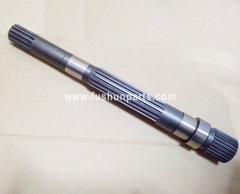
Inside an axial piston pump the shaft takes rotation from the coupling and carries it into the rotating group. Both ends of this one are splined, so torque reaches the cylinder block without a key or a separate hub, and the body is machined rather than cast. When a spline strips, a bearing collapses or the pump seizes, the shaft is the first part to examine — worn splines will not carry full torque or hold timing even when everything else in the pump is new.
This is a replacement part supplied on its own, not a complete pump. It arrives new, and it is bought most often as one line on a rebuild list rather than as a spare kept on a shelf. The buyers who come back for it are hydraulic workshops rebuilding pumps off cranes and rigs, fleet maintenance teams holding one part against a breakdown, and dealers who carry construction machinery spare parts for contractors in their own market.
| Property | Detail |
|---|---|
| Part number | K5V200SH131R |
| Component | Replacement drive shaft for a hydraulic variable piston pump |
| Pump family | KPM / Kawasaki-type variable piston pump, K5V200 series |
| Material | Steel |
| Condition | 100% new |
| Shaft form | Splined at both ends, machined shaft body |
| Supplied as | Drive shaft only; other pump internals are ordered separately |
| Fits | Hydraulic pumps on cranes, rotary drilling rigs and similar machines |
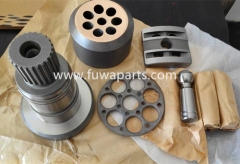
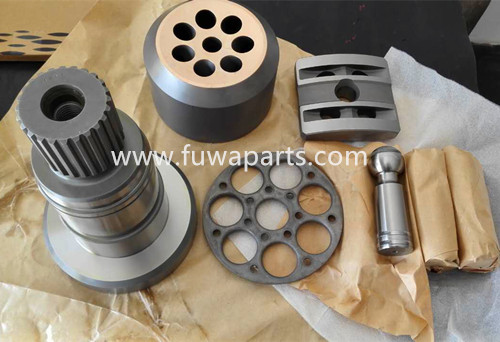
This shaft is one line in a much larger construction machinery spare parts range. Alongside it we supply the other internals a piston pump consumes during a rebuild: valve plates, plungers, plunger plates and drive shafts for hydraulic piston pumps, together with cylinder blocks, retainer plates and seal kits. Complete hydraulic pumps, hydraulic motors and hydraulic valves, including proportional valves, come from the same range.
Valve plates, plungers and plunger plates for Rexroth hydraulic variable piston pumps are the core of that list, and the same parts are supplied for KPM and Kawasaki-type units. Pump models covered run from Rexroth axial piston pumps — A10VSO, A4VSO, A7V0, A11VO, A4VG, A6VE, A2FE, A6VM, A2FM, A2FO, A6V, A7V, A8V and similar — through Kawasaki K3V63/112/140/180DT/DTP and K5V80/140/200DT/DTH, plus pumps built by Bosch Rexroth, Kawasaki, Linde and Parker.
Crawler crane parts sit in the same catalogue: track shoes, upper and lower rollers, sprockets and idler wheels, the undercarriage items that come across the same workshop bench as a hydraulic pump. When a machine needs both, the pump side and the undercarriage side can be checked together.

| Item | Detail |
|---|---|
| Minimum order quantity | 1 piece |
| Packing | Carton |
| Port of loading | Shanghai, Dalian, etc. |
| Trade terms | EXW, FOB, CFR, CIF |
| Payment terms | T/T; Western Union or as agreed |
| Delivery time | Most parts are in stock; usually 7–20 days, according to the quantity |
| Warranty | 2500 working hours or one year |

When a machine is out of production but still working, the part number matters more than ever. If the number you have is discontinued or hard to trace, send us the machine model together with that number: we search our supplier network, confirm what is genuinely available, and give you a straight answer before you commit. Where the original is no longer made, we set out the alternatives we can actually supply, or an upgrade path, and coordinate samples, inspection and made-to-order work with the suppliers we buy from. Sourcing, consolidation and export handling stay with us.
KPM variable piston pumps in the K5V200 family — the Kawasaki-type units used on crawler cranes, mobile cranes and rotary drilling rigs. The family name alone is not enough, because the build suffix after it changes the internals, so the nameplate has to be read rather than assumed. That is the same check a crane parts supplier should make on any pump part, and it is the check we make before a shaft is matched to a pump.
Spline wear is the usual finding. The flanks of the splines lose their square edge and the shaft begins to rock slightly in the coupling; by the time the pump is noisy, the damage is well advanced. Look for fretting marks where the shaft sits in the coupling, a polished or discoloured band on the body, and any scoring where a bearing has started to break up. A shaft in that condition is generally beyond re-use — it is one of the crane spare parts that cannot be dressed up and put back.
It can be done in some installations, but it is rarely the better choice. To reach the shaft the pump has to be opened, and the rotating group has to stay clean and in order while it is apart — conditions that are hard to hold on a machine standing on site. Most workshops pull the pump and rebuild it on a bench. Where the machine cannot be moved, plan the work for a dry, sheltered spot and bring the crane parts, seals and tools you will need in one trip.
A rebuild is the moment to renew whatever is already open: the valve plate, the plungers, the plunger plate, the seal kit and the bearings. Cylinder blocks and retainer plates are worth inspecting at the same time, because wear there is often what damaged the shaft in the first place. Send the pump model and we will list the construction machinery spare parts that belong to that build, so nothing is missed while the pump is apart.
Most repeat failures come from something else in the drive line or the pump rather than from the shaft itself. Check coupling alignment when the pump goes back, keep the oil clean and at the correct level, and renew the bearings and seals during the rebuild instead of later. On machines that work hard — crawler crane parts on site duty, rigs turning continuously — a pump that runs hot is a warning to act on, not a nuisance to live with.
It matters more than the machine model does. Pumps get swapped between machines, and heavy equipment parts like this shaft follow the pump, not the machine it is bolted into. If the pump has been changed at some point, send the nameplate photo from the pump that is fitted now and describe the internals you find when it is opened; that is what the shaft gets matched against, and it is usually enough to settle the fitment.


