Product Overview
Hydraulic cylinders rarely fail without warning. The first sign is usually a thin film of oil on the rod, then a slower hold under load, and by the time a function starts to drop away the gland has often been marked. This seal kit is the consumable that returns one cylinder to service: rod, wiper and piston seals for a single cylinder on the XCMG truck crane this kit is built for, supplied as a matched set rather than as loose rings chosen one at a time at the bench.
The people ordering it are usually the people doing the work — crane service workshops stripping a cylinder on the bench, fleet maintenance teams keeping a set on the shelf so a leaking boom or outrigger cylinder does not idle a machine for a week, and parts dealers who carry fast-moving hydraulic items for the cranes in their area.
Small and light next to undercarriage or boom components, a seal kit is the easiest item to add to a larger crane parts order. Filters, repair items and a couple of seal kits travel in the same consignment as heavier goods without changing how the shipment is handled.
Fleets are rarely made up of one machine type. Because the same range covers crawler crane parts and undercarriage items, a maintenance list that starts with one seal kit often grows into a single order covering several machines.
Kit Contents & Seal Positions
- Rod seal — sits in the gland and runs against the rod, holding pressure on the rod side of the cylinder. It is usually the element that shows the first thin film of oil.
- Wiper (dust) seal — the outer element of the gland, scraping dust, grit and water off the rod before any of it reaches the sealing surfaces inside.
- Piston seal — fitted to the piston head, separating the two chambers so the rod extends and retracts under control instead of creeping under load.
- One cylinder per kit — the set covers a single cylinder. Two cylinders, or a boom and outrigger reseal, means two or more kits.
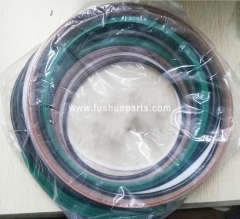
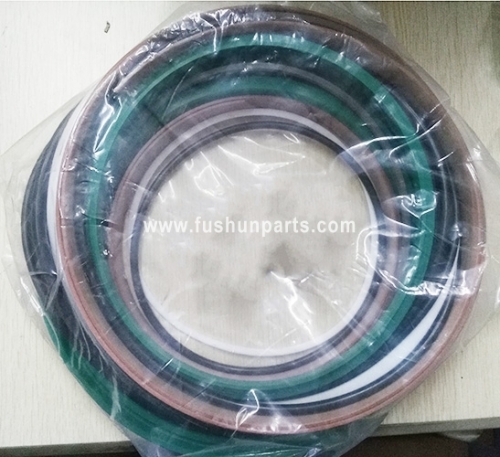
- Colour-coded rings — the elements arrive as a stacked set of flat rings marked in different colours, which is how a fitter tells the rod, wiper and piston seals apart at the bench without measuring them.
- Grouped and wrapped as a set — the rings stay in order and stay clean from the stores shelf to the moment the cylinder is opened.
- A small item for the stores shelf — a kit is compact enough to sit with your other crane parts until the next cylinder comes in, which is usually cheaper than waiting on a delivery while a machine sits idle.
- Count before you fit — lay the new rings against the seals you removed and confirm every position is covered. If something does not line up, stop and speak to us rather than forcing a seal into the wrong groove.
Specifications
| Product type |
Hydraulic cylinder seal kit |
| Fits |
XCMG QY50K mobile crane |
| Part category |
Hydraulic crane parts |
| Cylinder coverage |
One cylinder per kit |
| Seal elements |
Rod seal, wiper (dust) seal, piston seal |
| Material |
Rubber seal elements |
| Condition |
New, unused stock |
| Application |
Hydraulic cylinder reseal and overhaul |
| Verification |
Cross-referenced against original XCMG drawings before dispatch |
| Pre-dispatch check |
Multi-point inspection before packing |
| Fitment |
Confirmed against the cylinder position before dispatch |
| Order reference |
Machine model and the cylinder position being resealed |
| Supplier |
Shenyang Winnings Machinery Trading Co., Ltd. |
Cylinder Reseal Sequence
- Isolate and release pressure — shut the machine down, release circuit pressure and cap or plug the open ports. Grit that enters an open hydraulic system comes back later as a scored bore.
- Record before you strip — photograph the gland, rod end, shims and hose routing, and note any markings. Reassembly is quicker when you are matching a picture rather than a memory.
- Strip on a clean bench — lay the old seals out in the order they came out. A twisted, flattened or hardened seal usually explains why the cylinder was leaking.
- Inspect what the seals run against — rod chrome, gland bore and piston. A scored rod or a worn gland will destroy a new set soon after the machine goes back to work, and that is worth knowing before anything is fitted.
- Clean and de-burr — clear every groove and remove sharp edges. A nick on a groove shoulder cuts a new seal as it goes in.
- Fit in the right orientation — the rod seal, wiper and piston seal each have a direction. Lubricate them with clean hydraulic oil rather than grease and seat them squarely in their grooves.
- Reassemble and test — rebuild the cylinder, refill and vent the circuit, then cycle it slowly and watch the gland under pressure before the machine returns to the job.
Fitment & Supply Support
Cylinder seal sets look almost identical on a bench, and the difference between the correct set and a near miss is usually a matter of profile and a few tenths of a millimetre on a groove. Send the machine model and serial number, which cylinder you are stripping, and the numbers stamped on the cylinder or on the old seals if they are still legible. Photographs of the old seals laid out in the order they came out of the gland are often the quickest way to settle the question, and our engineers check the set against the XCMG technical data for that position before it is packed.
If the old seals are unmarked or already in pieces, say so rather than guessing. For most machines the model and the cylinder position identify the right set on their own; where they do not, we will tell you what else is needed instead of shipping a kit that has to be returned.
As a crane parts supplier we work with the people who do the work — repair workshops, fleet maintenance teams and parts dealers — so fitment questions are answered by the same desk that handles the order.
The catalogue runs from hydraulic seals and cylinders through undercarriage items and electrical and safety components to construction machinery spare parts, which means a cylinder reseal can be quoted together with whatever else the machine needs.
Beyond the crane fleet, heavy equipment parts for a rig, an excavator or a second crane brand are quoted from the same list, so one enquiry can cover the whole yard.
Ordering & Delivery
- Quantities — tell us how many cylinders you are working on and we will put the sets together in a single supply, whether that is one kit for a workshop repair or a set for every cylinder in a scheduled overhaul.
- Stock and delivery time — we hold stock across the catalogue, and for most items we can complete packing and shipping quickly. Delivery depends on your location and on the shipping method you choose, with sea, air and express options available, so confirm the current timing for your destination when you enquire.
- Payment and trade terms — the payment method and the Incoterms are agreed with your sales contact when the order is confirmed and stated on the order documents.
- Minimum quantity — ask your sales contact what the current minimum is for this kit, and for mixed orders.
- Packing — export packing is arranged with the order. Seal kits are small and light and are usually grouped with the rest of a consignment rather than shipped on their own; tell us if the goods are going straight to a site or into stores.
- Consolidating an order — crane spare parts, filters and repair items can travel with larger undercarriage or boom components in one shipment, so freight and documents stay with a single movement.
- Mixed fleets — crawler crane parts for other machines in the yard can be added to the same order.
- Beyond the crane — construction machinery spare parts for rigs, excavators and loaders are quoted from the same catalogue.
- One quotation, several brands — heavy equipment parts for a second crane brand in the yard can be listed with the seals, so the whole maintenance list is priced together.
- Before you confirm — check the machine model, the cylinder position and the quantity on the quotation. Two minutes at that stage costs less than a return consignment.
- After fitting — tell us how the kit performed. Feedback from workshops is how the seal selection stays right for the next machine.
Re-Chromed & Re-Bored Cylinders
- Chrome stripped and re-plated to size — if the plater returned the rod to its original diameter and the gland and piston were left untouched, the rod seal and wiper see the surfaces they were made for, and the standard set for this XCMG QY50K cylinder still applies.
- Rod ground back to clean up scoring — material comes off with the damage, so the rod finishes smaller than it started. The rod seal depends on a defined squeeze against the rod; on an undersize rod it may not load up enough to hold pressure, and the wiper no longer contacts the surface it was cut for.
- Barrel honed or bored oversize — the piston seal runs against the barrel wall. Removing metal from that wall opens the gap the seal was sized to close, so the cylinder drifts or creeps under load even with a fresh set fitted.
- Piston or gland remade — a built-up, sleeved or newly machined piston can come back with a groove a different width or depth from the original, and the piston seal will not seat in it the way the original drawing intends.
- Out-of-round or tapered after welding — a barrel that was welded and re-machined can finish slightly oval or tapered along its length. No flat seal compensates for that, and the leak returns soon after the machine goes back to work.
- What to send with the question — the finished rod diameter and bore diameter if the workshop worked to a dimension, which surfaces were touched, and whether the chrome went back on at the original size or was ground back further. Photographs of the finished rod and of the old seals laid out in removal order settle it faster than a description.
- What we can do about it — depending on what was changed, the answer is either the standard set for this cylinder, an oversize or made-to-measure seal set built to the measured dimensions, or a replacement rod or piston so the standard kit fits again. Either way it is confirmed against the original XCMG data for that cylinder position before packing.
- Ask before the cylinder goes back together — a kit ordered for a reworked cylinder and only then found not to suit means a return, a delay and a second strip-down. The check costs nothing at the enquiry stage.
- If several cylinders are in the same state — reworked cylinders from other cranes in the yard can be listed inside the same crane spare parts enquiry so the batch is reviewed in one pass rather than one cylinder at a time. The same check covers heavy equipment parts for other machines in the yard.
Discontinued & Hard-to-Find Parts
When a machine is out of production but still working, the part number matters more than ever. If the number you have is discontinued or hard to trace, send us the machine model together with that number: we search our supplier network, confirm what is genuinely available, and give you a straight answer before you commit. Where the original is no longer made, we set out the alternatives we can actually supply, or an upgrade path, and coordinate samples, inspection and made-to-order work with the suppliers we buy from. Sourcing, consolidation and export handling stay with us.
FAQ
Which XCMG models do your parts fit?
Our parts cover the XCMG range as a whole: truck cranes, all-terrain cranes, crawler cranes and the SR series rotary drilling rigs. This kit is built for one truck crane model and one cylinder position on it, and the model and serial number are what confirm the set. If you are buying for a different machine — a crawler, a larger truck crane or a rig — send those details and the same desk will quote the crawler crane parts or hydraulic items it needs.
What core parts do you supply?
Four families: hydraulic parts (pumps, motors, valves, cylinders and seal kits), undercarriage components (track shoes, rollers, idlers and sprockets), electrical and safety systems (controllers, monitors, sensors and limiters), and boom and attachment parts (boom sections, jib inserts and hook blocks). Filters and repair kits sit alongside them, and the same sourcing extends to construction machinery spare parts for the machines working around a crane fleet. For a cylinder rebuild, this kit is the hydraulic side of that list.
Do you provide technical support for overseas customers?
Yes. Enquiries are answered around the clock, and our engineers — most with more than ten years in crane hydraulics and electrics — help with part selection, installation and commissioning. As a crane parts supplier working with overseas workshops every day, we usually work from machine details, photographs and part numbers rather than a site visit, so the more you send at the start, the fewer round trips the answer takes.
Do you accept customization for boom and attachment parts?
Yes, for boom and attachment parts. Boom sections, jib inserts and attachment items are built to suit the XCMG crane or rotary drilling rig they are going on, so send the machine model together with a drawing or the details of what you need. Seal kits such as this one are supplied as the standard set for the cylinder rather than made to drawing; if the cylinder itself has been reworked, tell us and we will say straight away whether a standard set is the right route.
Which cylinder does this kit serve on the machine?
The set covers one hydraulic cylinder — a single position, not the whole machine. On a truck crane that could be a boom, outrigger, hoist or steering cylinder, and the seal set is not the same for each, so confirm the position with your enquiry rather than assuming one kit covers them all.
Can the kit be matched to a cylinder that has been re-chromed or re-bored?
If the rod or the bore has been reclaimed, the standard set may no longer be the right one. Tell us what the workshop did and, where they worked to a dimension, what that dimension was; we will confirm whether the standard set still applies or whether there is another route. It is worth asking before the cylinder goes back together rather than after.