

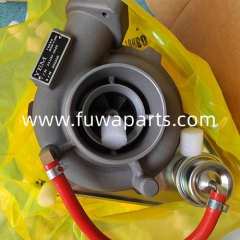
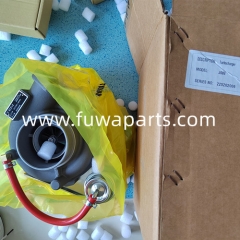
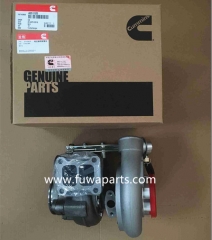
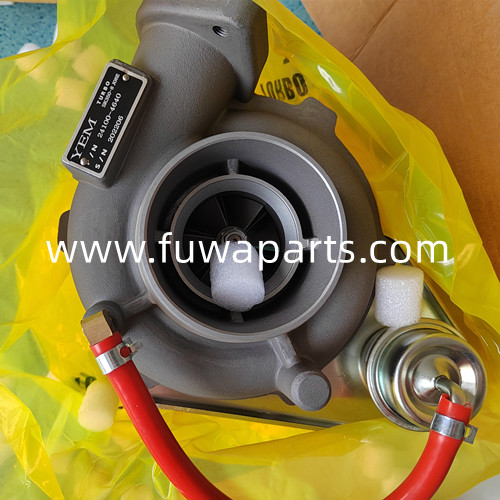


A failed turbocharger takes a crane out of service, and a tired one drains power long before it stops working altogether. This replacement unit is built for the Cummins diesel engines used in cranes and heavy equipment, and it is the same turbo our customers order for YEM J08E-powered machines in the SK350-8 class. It goes on in place of the original, restores boost pressure and load response, and arrives as a complete assembly with the actuator fitted, as the photographs show.
Most orders start after a diagnosis rather than a guess: low power when the load comes on, black smoke that will not clear, oil in the intake, or a whine that rises with engine temperature. If that is what your machine is doing, the numbers on the old unit and on the engine plate are all we need to confirm the correct replacement.
We are a crane parts supplier working with fleets, repair workshops and parts dealers. Engine parts sit alongside the rest of our crane spare parts range, so the gaskets, filters and oil lines that belong with a turbo replacement can be arranged in the same enquiry instead of being chased separately.
| Item | Detail |
|---|---|
| Turbocharger frame | HX40W |
| Cummins part number | 4051120 |
| Item number | 24100-4640 |
| Engine application | YEM J08E |
| Machine reference | SK350-8 |
| Data plate marking | J08E, series 2252020006 |
| Compressor housing | Cast housing, matte black finish |
| Turbine housing | Cast housing, silver-grey finish |
| Actuator | Metal can, hose fitted |
| Connections | Flanged inlet and outlet |
| Condition | New replacement unit |
Several numbers identify this unit, and it helps to know which one to quote. The Cummins part number 4051120 is what most buyers search with, the item number 24100-4640 is how the same unit is listed for YEM J08E applications, and the J08E and series markings on the plate belong to the unit in the photographs. The most reliable reference is always the number on the old turbo itself, so photograph the plate before the unit comes off the machine.
Authenticity is checked before dispatch, not after a complaint. The turbo is supplied in Cummins Genuine Parts packaging with anti-counterfeit labelling, and the traceable QR code on the box can be scanned against Cummins' database so you can verify the number yourself. All construction machinery spare parts leaving us for an engine application go through a three-step check – dimensional, material and pressure testing – and anything that does not pass does not ship.
If the plate is corroded or the old unit has already been scrapped, send the engine model, the machine model and whatever photographs you have. Matching is done on numbers rather than appearance, because a wrong housing can look right on the bench and only show up once the machine is under load. On crane spare parts at this level, that check is what keeps a wrong unit off the site.
| Engine system | Components we supply | Typical model references | Material & documentation |
| Fuel system | Fuel pumps, injectors, filters | QSK19, QST30, NT855 | Chromium steel injectors; ISO 9001 and CCC documentation |
| Cooling system | Water pumps, thermostats, radiators | FUWA QUY350, SANY SR285 | Aluminium housings; RoHS and CE documentation |
| Valve train | Cylinder heads, inlet and exhaust valves, valve seats | XCMG XGC880, Zoomlion ZCC9800 | Cast iron alloy heads; heat-treated, Stellite-coated valves; non-destructively tested seats |
| Lubrication | Oil pumps, filters, coolers | Cummins-powered cranes and drilling rigs | Supplied against the engine number |
| Gaskets and seals | Head gaskets, seal kits | Any Cummins-powered crane or rig | Supplied against the engine number |
| Wear parts | Bushings, engine belts, bearings | Any Cummins-powered crane or rig | Supplied against the machine number |
| All engine components | Complete assemblies, gaskets, small parts and fixings | Any Cummins-powered crane or rig | Checked against ISO 8528 performance criteria |
When a machine is out of production but still working, the part number matters more than ever. If the number you have is discontinued or hard to trace, send us the machine model together with that number: we search our supplier network, confirm what is genuinely available, and give you a straight answer before you commit. Where the original is no longer made, we set out the alternatives we can actually supply, or an upgrade path, and coordinate samples, inspection and made-to-order work with the suppliers we buy from. Sourcing, consolidation and export handling stay with us.
Yes. The unit is supplied for Cummins diesel engines in cranes and heavy equipment, and it covers Chinese-built engines including Dongfeng Cummins and Xi'an Cummins as well as Cummins engines built elsewhere. For crane parts orders, the engine plate details together with the number from the old turbo are what confirm the fitment – not the model name on its own.
Every unit is supplied in Cummins Genuine Parts packaging with anti-counterfeit labelling, and the QR code on the box can be scanned against Cummins' database, so you can verify the part yourself before it goes on the machine. That check matters more on heavy equipment parts than on everyday consumables, because a turbo assembled from mismatched components can fail within hours of fitting. The same standard applies to every crawler crane parts order we ship, whether it is a single unit or a batch for a fleet.
Yes. Weichai and Shangchai engine parts are supplied for SANY and XCMG equipment, and the same construction machinery spare parts service covers filters, pumps, seals and gaskets for those engines. If your fleet runs a mix of Cummins and Chinese engines, send the list for both and the two can be quoted together.
Contact us through WhatsApp or email and mark the enquiry as urgent. The engineers who handle these jobs work on Cummins engines and deal with overheating, fuelling and boost-related faults, and urgent repairs are put first, including the visa and travel arrangements an on-site visit requires. Send the machine model, the symptoms and the site location, so the visit is prepared before anyone travels.
The plate carries the description, the engine model and the series number of the unit it belongs to – on this turbo the description reads Turbocharger, the model reads J08E, and the series number is stamped alongside. Across construction machinery spare parts, the markings on the old part are more dependable than a printed parts list, which is why every crawler crane parts enquiry we handle starts with a photograph of the plate.
Yes. The unit is supplied assembled as shown, with the actuator fitted and its hose already attached. If your engine uses a different actuator arrangement, mention it when you send your numbers and we confirm the configuration that applies to your machine.


