





|
|
|||||
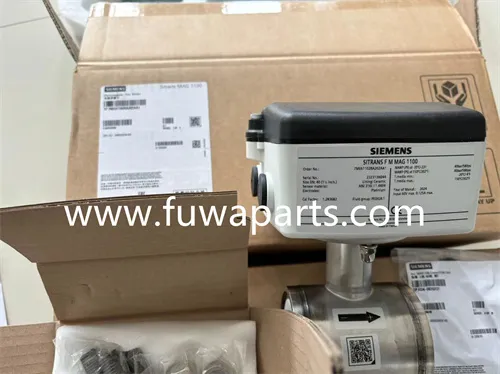
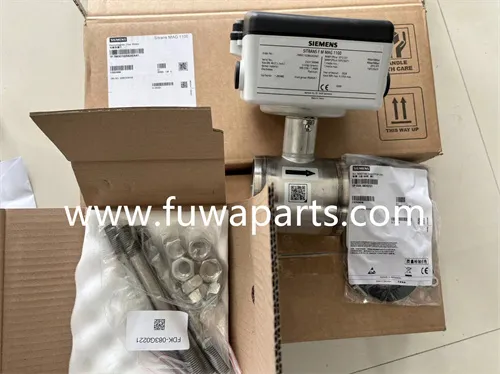
This is the CSM cutter / SITRANS F control transducer used in the Siemens SITRANS F M MAG 1100 flow measurement assembly — the small electrical unit that sits in a crane's or drilling rig's measurement circuit and passes the reading back to the controller. When it fails, the reading it feeds goes with it, so most of these leave us as urgent crane spare parts rather than as planned stock. It takes the same position as the unit it replaces, and as a crane parts supplier we check the number you quote against your machine before the part is dispatched.
Typical buyers are fleet maintenance teams keeping a crane working, workshop fitters swapping a failed unit at the bench or at the machine, and dealers holding crawler crane parts for customers of their own. It replaces the failed unit in the same position, and it is ordered by the number printed on the old part rather than by the machine model alone, because two machines of the same type can carry different sensor versions. If you are rebuilding a whole control circuit rather than replacing one unit, tell us what the machine does and we will price the list together.
| Product type | CSM cutter / SITRANS F control transducer |
| Series | SITRANS F M flow measurement |
| Order number | 7ME61102RA202AA1 |
| Additional reference | 232313H044 |
| Supply | 24 V AC/DC |
| Frequency | 50/60 Hz |
| Power | 10 W |
| Pressure rating | 40 bar (1580 psi) |
| Condition | 100% new, factory-tested |
| Label data | Order number, sensor serial number, sensor material, calibration factor |
| Product family | Electrical and control components |
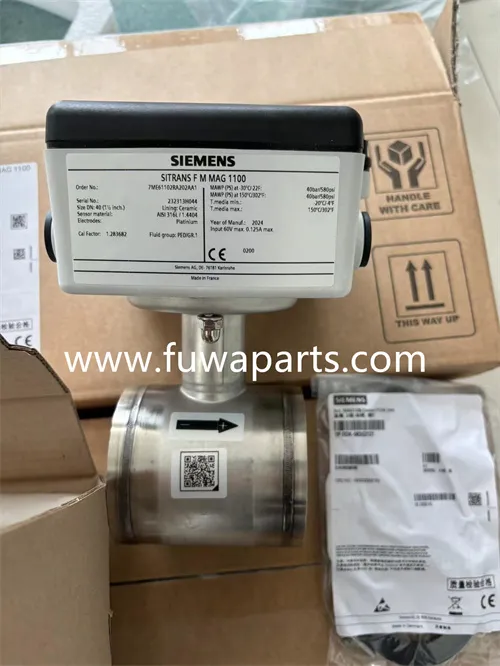
Order by the number, not by the machine. The order number for this unit is 7ME61102RA202AA1, and the listing carries 232313H044 alongside it as a second reference, together with the CSM cutter designation. Read yours straight off the old unit rather than from a manual or an old invoice, and quote it exactly as printed, including every letter — a trailing character is often what separates one variant from the next. While the old part is still on the machine, that is the moment to check the construction machinery spare parts number against what you intend to order.
On the unit itself, the factory label records the order number, the sensor serial number, the sensor material and the calibration factor for that individual sensor. Photograph the label before the old unit comes off the machine: the calibration value belongs to the sensor you are removing and settles any question about the reading afterwards. If the label is worn, painted over or missing, send a picture of the unit in place and of the machine plate instead — crane parts are identified by position and machine as often as by number.
| Component group | Typical use |
| Master controllers | RC6-9 series for crane operation control |
| Load monitoring | Crane scale load cells and load moment indicators (LMI) |
| Safety sensors | Wind speed sensors, angle sensors and overload protection devices |
| Displays and cables | High-visibility displays with durable cables for real-time data |
| Camera monitoring | 360° surveillance on crawler cranes and drilling rigs |
| Controllers, limiters and switches | Replacement units from the electrical parts range |
| Cables, monitors, handles and pedals | Cab and control-desk components for the same machines |
When a machine is out of production but still working, the part number matters more than ever. If the number you have is discontinued or hard to trace, send us the machine model together with that number: we search our supplier network, confirm what is genuinely available, and give you a straight answer before you commit. Where the original is no longer made, we set out the alternatives we can actually supply, or an upgrade path, and coordinate samples, inspection and made-to-order work with the suppliers we buy from. Sourcing, consolidation and export handling stay with us.
It is supplied for measurement and control circuits on the machine families we handle: FUWA crawler cranes, SANY rotary drilling rigs, XCMG and ZOOMLION machines. Cranes and rigs from other makers often run the same Siemens flow measurement family, so the practical answer is to send us the machine model and a photograph of the old unit and let our engineers confirm. In practice, crawler crane parts like this one are identified from the number on the unit and its position in the circuit rather than from the machine model alone.
It is the supply the unit expects from the machine's control circuit. Match it against what is printed on the unit you are replacing before you order. If your machine runs a different control supply, tell us first — it changes which crane spare parts we can offer for that circuit.
On many cranes the swap is a straightforward job for a workshop fitter once the line has been isolated and drained, but it does need lock-out, pressure release, correct orientation and a check of the reading afterwards. If your team would rather have support, our engineers can talk the job through by phone or video before you start, and can supply the fitting and calibration guidance for your machine.
Send three things: the machine brand, model and serial number (a photograph of the machine plate covers it), a photograph of the old unit in position, and any number you can read off it. Our engineers check the circuit against the number you supply and come back with a confirmation or a closer match. Working that way means crane parts are ordered against the machine itself rather than against a description that may cover several variants.
It happens often on machines that work outside. Photograph the unit in place, the pipework or wiring around it, and the machine plate. We identify the unit from the machine and its position as much as from the number, and if something is still unclear we ask for one more photo before quoting. As a crane parts supplier, the aim is that you order once and fit once.
The calibration factor is printed on the sensor label and belongs to that individual sensor, so keep the label and its documentation with the machine's records — it is the reference if the reading is ever questioned. Where the controller or transmitter stores a calibration value, tell us the model and we will confirm whether it has to be re-entered for the new unit. The same construction machinery spare parts records we use to match your machine carry those details, so a question raised months later can still be answered.
Yes. Retrofitting older systems is part of what we do, and it starts with the machine model, the control voltage and what the existing system is supposed to do. On ageing cranes the usual weak points are aged wiring, a display that no longer reports clearly and sensors that have been re-specified over the machine's life. Send the machine details and a photo of the control panel and our engineers will set out what can be kept, what has to be replaced, and where a made-to-order component is the better route — the same heavy equipment parts list can then be planned once for a whole fleet running the same control system.


