




Fuwa crawler cranes work on ground that punishes undercarriage — mud, rock, sand, spoil and constant tracking from one lift position to the next. This range covers the crawler crane parts that absorb that punishment: track shoes, track chains with pins and bushes, drive sprockets, upper and lower rollers, idler wheels and the track tension unit.
The parts are quoted for Fuwa QUY crawler classes from the 35 t machines through the 350 t class, and the model table below shows every class we cover. Fleet buyers usually need one machine's track frame at a time, so a complete undercarriage for a single crane can be quoted on one enquiry: shoes, chain, sprockets, rollers and idlers confirmed together rather than ordered piece by piece over several weeks. The same enquiry can also carry hydraulic, electrical, engine and maintenance items a machine needs while it is down.
As a crane parts supplier we put the fitment question before the stock question. Send the machine model and the number on the component you are replacing, and the answer you get is whether that part belongs on your crane — not simply whether something similar is on a shelf.
Most enquiries come from crane fleet maintenance teams, hire and rental yards, repair workshops and aftermarket dealers, and the shape of the order is similar across all of them: shoes in sets, rollers and idlers in pairs or full runs, sprockets one or two at a time. Every item is a new crane spare parts component, matched to a Fuwa class and checked against the machine before it is quoted.

| Fuwa model | Lifting class |
| QUY35 | 35 t class |
| QUY50 / QUY70 | 50 t and 70 t classes |
| QUY80 / QUY90 | 80 t and 90 t classes |
| QUY100 / QUY120 | 100 t and 120 t classes |
| QUY150 | 150 t class |
| QUY250 / QUY320 | 250 t and 320 t classes |
| QUY400 / QUY500 | 400 t and 500 t classes |
| QUY650 / QUY750 | 650 t and 750 t classes |
| QUY1250 | 1,250 t class |
Undercarriage components in this range are supplied in 35SiMn, 35SiMnMo and 28CrMnMo, the alloy steels normally specified by a crane parts supplier for construction machinery spare parts of this class. Each grade behaves differently under impact and abrasion, so the one we quote follows the component and the duty it does on your machine.
On a crane of this size the grade matters as much as the number. These heavy equipment parts work in rock, mud and abrasive spoil, and steel that is not matched to that duty usually shows the difference as early wear rather than as a clean failure you can point to.
Every part is supplied new. If your workshop or fleet standard names a steel grade for rollers, idlers or sprockets, put it in the enquiry and the quotation comes back against it. Where no standard is given, we quote the grade normally used for that component on your Fuwa class and tell you which one it is, so you can compare it with what came off the machine.
| Minimum order | One piece |
| Trade terms | EXW, FOB, CFR, CIF |
| Port of loading | Shanghai or Dalian |
| Payment | T/T, Western Union, or as agreed |
| Lead time | Most parts in stock; usually 7–20 days, according to the quantity |
| Warranty | 2500 working hours or one year |
| Packing | Confirmed per shipment with your sales contact |
| Shipping method | Sea, air or courier, agreed with your sales contact according to the parts, the quantity and the destination |
| Cargo insurance | Included under CIF terms; arranged by the buyer on EXW, FOB and CFR shipments |
| Grades supplied | 35SiMn, 35SiMnMo and 28CrMnMo, depending on the component ordered |
| Items not held in stock | Lead time for the number you need confirmed with the quotation |
Machined Working Surfaces
The surfaces that carry the load are machined rather than left as they come off the casting or forging: sprocket teeth, roller treads and flanges, idler rims, and the mounting faces and bolt-hole faces that seat against the track frame. Bore and seal faces where the component turns are finished the same way. Fine machining marks are normal on a new component and are not a defect — if you are checking a part before it goes on the machine, the mounting face and the tooth profile tell you more than the outside of the housing.
Paint, Protection And Variation
Non-working surfaces are painted to protect the steel during storage and shipping rather than for appearance. These components live under a crane in mud, dust and water, so the finish you receive can differ between components and between production runs: a different shade of paint, or a scuff picked up in transit on a painted face, has no effect on fit or on how long the part lasts. Machined surfaces are protected for the voyage and wiped down before the part is fitted.
What The Photographs Show
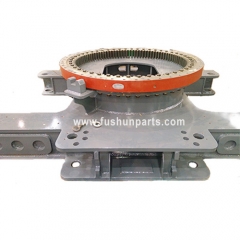
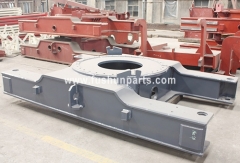
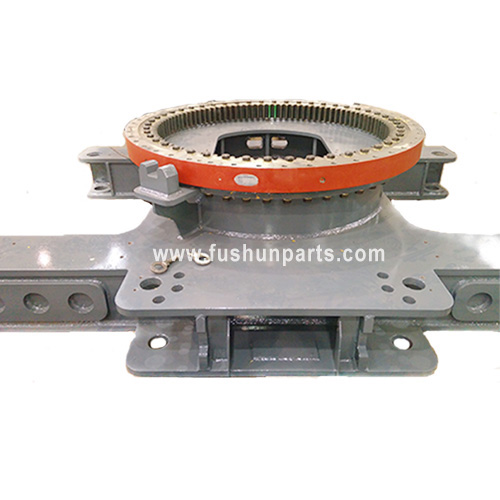
If you are comparing quotations, ask for pictures of the actual crane spare parts you are being offered rather than a catalogue illustration: the complete component, a view straight onto the mounting face, a close view of the machined surface, and the number cast, stamped or riveted on the part. We can photograph the items going into your shipment so you can hold the image against the component coming off your machine and see that the number, the mounting pattern and the working surfaces are the ones you ordered.
Checked Before Packing
Each item is checked against the confirmed model and component number before it is packed, and the quantity is counted against your order. Where appearance has to match what is already on the machine — a fleet paint standard, for example — say so in the enquiry and we will match what can be matched and tell you plainly where it cannot. If a part arrives wrong or damaged, photograph it as received, keep the packing, and send the details to your sales contact; we compare it with the number confirmed on the order and agree the next step with you.
When a machine is out of production but still working, the part number matters more than ever. If the number you have is discontinued or hard to trace, send us the machine model together with that number: we search our supplier network, confirm what is genuinely available, and give you a straight answer before you commit. Where the original is no longer made, we set out the alternatives we can actually supply, or an upgrade path, and coordinate samples, inspection and made-to-order work with the suppliers we buy from. Sourcing, consolidation and export handling stay with us.
Watch a few specific points. Track shoes wear thin or take a sharp edge and their bolt holes can open up; sprocket teeth hook over and point as they wear; rollers develop flat spots or stop turning freely; idlers and tension units begin letting the chain run slack. On a working crane these crawler crane parts rarely fail all at once — the chain will hold tension for a while, then start riding up on the sprocket even after adjustment. Once that happens the track frame is due for a proper inspection rather than another tension setting.
Not on the assumption that they look alike. These heavy equipment parts are sized to the machine class, so a sprocket that suits one Fuwa crawler class does not automatically belong on the next, even where the component numbers read similarly. The check is always the same: the machine model plus the number on the old component. If you only have the model, send that and we will come back with the numbers that apply, so you can match one against the part in your hand.
Set it to the figure your Fuwa operator's manual gives for that model, then check it again after the first shifts, because the chain settles as new crane spare parts bed in. Tension also moves with ground conditions — the value used on soft fill is not the value used on hard rock. A chain left too loose will climb the sprocket teeth, while one set too tight loads the chain, bushes and roller bearings every time the machine tracks, so follow the manual figure rather than a general rule.
Yes — that is how most track frames are rebuilt, one group at a time, and it is the normal way these construction machinery spare parts are renewed. Two combinations are worth thinking about before you order. Where a sprocket and its chain are both at the end of their life, many fleets renew them together instead of pairing new teeth with a chain that has already stretched. Where rollers are being replaced in a run, replace the whole run if you can, because mixing new and worn rollers on one track frame loads the new ones unevenly. Tell us what you are keeping on the machine and we will say how the parts are normally combined.
Working surfaces such as sprocket teeth, roller treads and mounting faces are machined, and the rest of the component is painted for protection during storage and transport, which is the finish you see in our product photographs. Finish can vary between components and between production runs, so if the appearance has to match what is already on the machine, ask for photographs of the crane spare parts you are ordering before the shipment is prepared.


