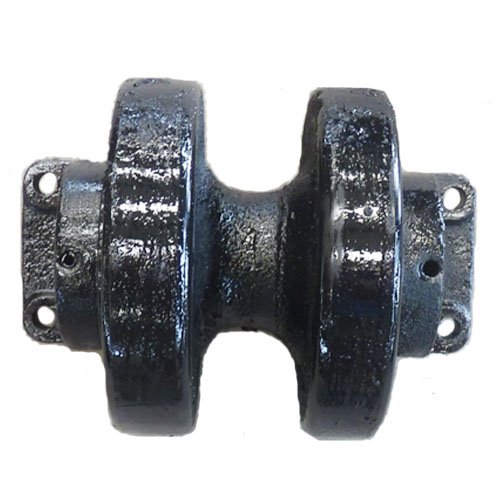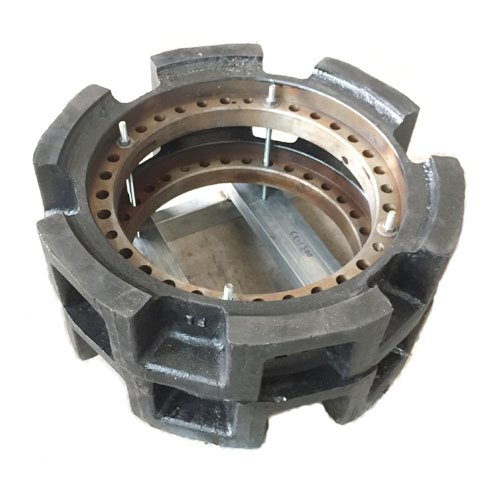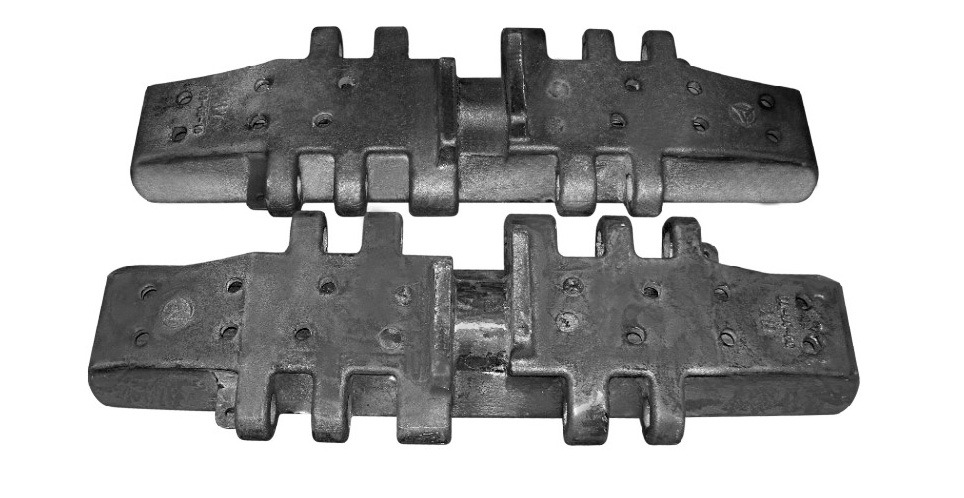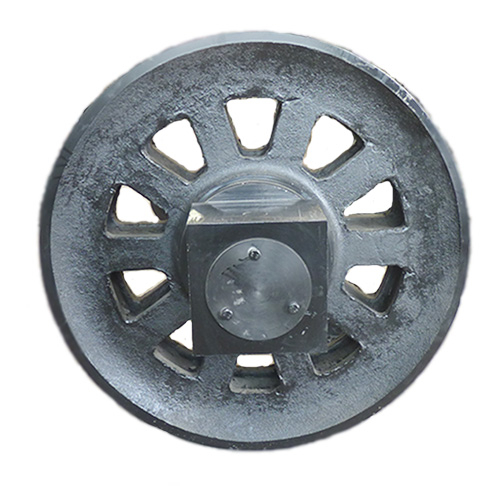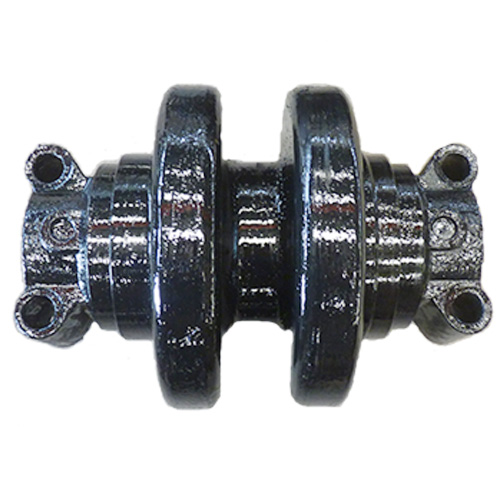
Crane Undercarriage Parts Upper Rollers for HITACHI SUMITOMO

We offers crane upper rollers for sales and other crawler parts. Feel free to browse our top rollers catalog. Contact us for more information top rollers. We can send you a price quotation and assist you with any questions you may have.
Description

Crane Undercarriage Parts Upper Rollers for HITACHI SUMITOMO
 

Premium Sprockets Rollers for Crawler Crane Undercarriages
Maximize your crawler crane’s mobility and load-bearing capacity with KOBELCO heavy-duty Top Roller. Engineered for mining, construction, and heavy lifting operations, our upper rollers deliver unmatched durability on rugged terrains.
smileyIn Stock & Ready to Ship | smileyCustom Sizes/Designs Accepted |  smiley1-Piece MOQ


Key Product Features

►Superior Material Composition

High-performance alloy steel options: 35SiMn, 35SiMnMo, 28CrMnMo
​​​​​​Heat-treated surfaces for wear resistance & impact absorption
Corrosion protection for extended service life

► Reliable Performance Guarantee
2500 working hours or 1-year warranty (whichever comes first)
Rigorous QA testing compliant with ISO/CE standards
​​​​Compatible with Liebherr, Caterpillar, Hitachi, Zoomlion SANY,  FUWA, XCMG and major crane brands

►Fast-Track Order Fulfillment
7-20 days lead time (most parts in stock at Shanghai/Dalian ports)​​​​​​
Export-ready plywood box packaging for damage-proof transit
​​​​Flexible logistics: EXW, FOB, CFR, CIF terms


Technical Specifications

Parameter            Details
Material Options           35SiMn / 35SiMnMo / 28CrMnMo
Surface Treatment           Shot blasting + Anti-rust coating
Load Capacity           Customizable per OEM requirements
Applications           Mining sites, port logistics, bridge engineering, oilfield operations
 

Why Choose SHENYANG WINNINGS MACHINERY TRADING CO. LTD?

►Precision Manufacturing
CNC-machined bolt holes for perfect alignment
Interchangeable design reduces downtime during replacements
►OEM/ODM Capabilities
Submit drawings for custom-idler rollers solutions
​​​​Bulk order discounts available
► Global Supply Expertise
10+ years serving EPC contractors and crane rental companies
T/T, Western Union, and secure payment gateways accepted


Crane top rollers:


Top rollers Model:
 
HITACHI
KH100 KH125 KH150 KH180 KH230 KH250 KH300 KH500
KH700 CX300 CX500 CX550 CX650 CX700 CX900 PD7
PD100              
SUMITOMO
SC350 SC400  SC500 SC550 SC650 SC700  SC800  SC100
SC1500  LS13RH LS78RM LS78RH5 LS78RHD5 LS98 LS108RM  LS110C
LS118RH3  LS118RH5 LS120RH5 LS138H LS138RH5 LS208H LS218H LS218RH5
LS238RH2  LS238RH3 LS238RH5 LS458HD LS468HD LS518  LS528   SD205
SD307 SD407 SD610          
HITACHI SUMITOMO
SCX300     SCX400 SCX500 SCX700  SCX800 SCX900 SCX1200 SCX1500
SCX2000    SCX2500 SCX2600 SCX2800        
FUWA
QUY35    QUY50 QUY70 QUY80 QUY90 QUY100 QUY120 QUY150
QUY250    QUY320 QUY400 QUY500 QUY650 QUY750 QUY1250  
SANY
SCC500   SCC550 SCC600 SCC700 SCC750 SCC800 SCC1000  SCC1250
SCC1500   SCC1800 SCC2600 SCC3000 SCC4000 SCC5000  SCC6500 SCC7500
SCC8100    SCC8200  SCC8300  SCC10000 SCC16000      
ZOOMLION
QUY35     QUY50 QUY70 QUY80  QUY90 QUY100 QUY120 QUY130
QUY150   QUY180 QUY250 QUY320 QUY400  QUY500  QUY650 QUY750
QUY1250              
XCMG
QUY 38-350 TON            


 Related Products:
Upper Rollers Drive Sprockets Track Shoes Idler Pulleys Lowre Rollers
       
 
FAQ – Top 5 Customer Questions

1. What Products Do You Supply?
We specialize in full-range crawler crane undercarriage components:
Track Shoes/Plates | Drive Sprockets | Idlers
Upper/Lower Rollers | Bottom Rollers | Carrier Wheels
Custom OEM parts accepted via drawings or samples.

2. Why Choose Us Over Competitors?
Factory-Direct Pricing: 10+ years of export expertise, 15-30% cheaper than traders.
Zero Minimums: Order 1 piece or 1,000+ with equal priority.
 
3-Stage Quality Assurance:
▶ Raw Material Spectrometry Testing
▶ Pre-Production Sample Approval
▶ 100% Final Inspection + Anti-Rust Packaging

3. I Only Know My Crane Model – No Part Number. Help!
No problem! We maintain a global machine database for accurate matching:
Send photos of old parts (with key dimensions marked)
Provide equipment nameplate details (Model/Serial No.)
Connect via WhatsApp/Email for real-time technical support

4.  How Do You Guarantee Quality?
Military-Spec Inspection Process:
Raw Material Check → Prototype CMM Measurement → Batch Hardness Test →  72-Hr Salt Spray Test → Dynamic Balance Certification  
Includes Material Test Reports & ISO 9001 Compliance

5. What’s Your Warranty Policy?
Industry-Leading Coverage: 1 year or 2,500 working hours (whichever comes first).
Emergency Support: 48-hour spare parts dispatch for Asia/Middle East/Africa regions.


Our main Product:
Structure Parts       Crawler Parts       Hydraulic Parts       Electrical Parts        Maintenance Parts       Planetary Parts
Hoist winches         Track shoes       Hydraulic pump        Cables       Filters  
Counterweights        Sprockets       Hydraulic motor        Monitors        Repair kits  
Lifting hook         Upper rollers        Valve        Controllers        Seal kits  
Crane boom       Lower rollers       Other         Limiter    
Wire rope        Idler pulleys          Sensors         Engin Parts
Drive Cab             Display    
Undercarriage           Handle    
Sheaves             Pedal    
Clutch           Switch    
Brake


Product Overview

Upper rollers — also called carrier rollers or top rollers — are the wear parts that carry the upper run of the track chain on a crawler crane undercarriage. Mounted on the track frame above the track links, they turn continuously as the chain travels, and they take load every time the machine moves, slews or lifts on its tracks.

We supply these rollers as crane spare parts for Hitachi and Sumitomo crawler cranes. They are a straight replacement item rather than an upgrade: the roller that comes off your machine is the one the undercarriage was built around, and the right replacement is the one that matches it, not the one that is closest in size.

Because fitment is decided by the machine, every order is matched to the crane's model and to the number on the old roller before we quote. A roller that is nearly right will wear the track chain, the track frame and the rollers next to it, so identification is treated as part of the order rather than a formality.

Machine Fitment

ItemDetail
RangeCrawler crane parts — undercarriage
ComponentUpper (carrier) roller
Also known asCarrier roller, top roller
Machine coverageHitachi crawler cranes
Machine coverageSumitomo crawler cranes
Service typeWear part
Identification routeCrane model plate plus the number on the old roller
MountingBolted to the track frame
SupplyMatched to your machine before the order is placed

Identifying the Correct Roller

  1. Read the machine's identification plate. Take the make, model and serial number from the plate on the crane — Hitachi and Sumitomo build undercarriages differently across model generations, and the plate is the only reliable starting point.
  2. Look closely at the roller that came off. Clean the end face and check for a stamped or cast number, and note whether the roller came from the left or the right side of the machine.
  3. Measure the old roller. Record the tread diameter, overall width, the bore or shaft size and the mounting hole centres. Photograph it from the front, the side and the mounting face, and take one picture of it still sitting on the track frame.
  4. Count what is fitted. Note how many rollers the machine carries per side, so the quantity on the enquiry reflects the machine rather than an assumption.
  5. Send the details to us. Machine model, serial number, the old roller number, measurements, photographs and quantity are enough to confirm the match. As a crane parts supplier for Hitachi and Sumitomo undercarriages, we check the roller against the machine before anything is quoted.
  6. If the number has worn away, send the machine details anyway. Many crane parts are identified from the machine's model, build detail and the position the roller came from, rather than from a legible marking on a worn component.

Roller Wear & Inspection

  • Inspect with the machine parked on firm, level ground. Lower the track so the rollers are unloaded, chock the machine, and work one side at a time so the rollers you compare have seen the same conditions.
  • Look before you touch. Oil or grease weeping from the end of a roller, fresh grit packed around the seal, or rust streaks running down the body all point to a seal that has already failed. Seal damage, not tread wear, is what takes most heavy equipment parts off a machine.
  • Turn each roller by hand. With the track raised clear, a roller should spin smoothly and quietly. A rough, dry or grinding feel, or any side-to-side play, means the bearing is on its way out.
  • Study the running surface. A flat spot, a stepped edge or a groove worn across the tread usually means the roller has stopped turning or is running out of line with the chain.
  • Check how the roller sits on the frame. A roller sitting low, cocked or out of line on its bracket supports a worn mounting face or a distorted bracket rather than to a tired roller on its own.
  • Watch the chain over the top of the frame. A track that rides up, chatters or runs unevenly is often following a roller that has already failed.
  • Plan the check into scheduled maintenance. Rollers are far easier to replace in a planned window than mid-job; construction machinery spare parts ordered ahead keep a crane productive instead of standing idle.
  • Record what you find. Note the position of each roller, its condition and the machine hours, so the next set is ordered from history rather than guesswork.

Applications & Buyer Scenarios

  • Crane rental fleets. Rollers are renewed as part of an undercarriage overhaul between contracts, so a machine goes back out with a complete set instead of coming in again for one roller.
  • Contractors running their own Hitachi and Sumitomo cranes. A crane on a long infrastructure job has its undercarriage work done in a planned window, using measurements and photographs taken on site.
  • Repair workshops and rebuilders. Track frames arrive stripped, and a workshop rebuilding crawler crane parts needs the roller to suit the frame and the chain going back on, not just the machine model.
  • Parts dealers and distributors. A fast-moving undercarriage line is held so a customer's crane is not waiting on a special order for a wearing part.
  • Ports, terminals and steel plants. Cranes that travel constantly in a confined yard put continuous hours on their rollers, and maintenance departments work from a fixed list of positions per machine.
  • Quarries, mines and heavy industry. Abrasive ground, mud and long travel distances shorten seal life quickly, and sites where construction machinery spare parts are consumed fast usually keep undercarriage items ready.

Ordering & Delivery

  1. Send the enquiry with the machine make, model and serial number, the number from the old roller, the quantity you need and photographs of the part. Say whether the rollers are for one machine or several, and whether the machine is down or the work is planned.
  2. We confirm the roller that matches and come back with anything still unclear. As a crane parts supplier working with Hitachi and Sumitomo undercarriages, we would rather raise a question than send a roller that is close but wrong.
  3. You receive a quotation covering the rollers and the freight route. Order quantities, lead time, payment terms and warranty cover are confirmed for your specific order at that stage, because they vary with the part, the quantity and the destination. If the machine is standing, say so in the first message; it changes how the order is planned.
  4. Confirm the order and the packing route. Heavy equipment parts of this density are normally crated or palletised for export, and any special labelling or documentation your customs broker needs should be agreed here rather than after dispatch.
  5. Dispatch and documents. The shipping documents travel with the consignment, and tracking details are passed to you as soon as the goods leave.
  6. Check in on arrival. Compare the rollers with the old part and with the photographs you sent before fitting; if something does not match what was agreed, contact us before the parts are fitted.
  7. Enquiries go to sales@fuwaparts.com. For shipping, packing and documentation questions, copy logistics@fuwaparts.com so both sides of the order are answered together.

Roller Lubrication & Storage

Storing a spare set

Store replacement rollers dry and off the floor, standing on the end face on a pallet or left in the crate they arrived in with the end protection still in place. Keep them clear of standing water, out of direct sunlight, and away from welding, grinding or shot-blasting areas where fine metal dust settles into the seal lip and does its damage long before the roller is fitted. Never stack anything on the tread, and label each set by machine and by position on the frame so the right rollers go onto the right track frame when the overhaul window comes round. If a set of crane spare parts is being held for months, wipe the running surface and check the seals again just before fitting as well as on arrival — a roller stored like this is still in the condition it left us in.

Which roller needs grease

Not every upper roller is looked after the same way. Some carry a grease fitting on the end face, while others are sealed for life and should simply be kept clean. Tell us the crawler crane model and where the roller sits on the frame and we will confirm which type you have and what it needs in service, so the wrong routine is not applied to a sealed roller and a serviceable one is not run dry.

Greasing in service

Work to the lubrication interval in the crane manufacturer's undercarriage schedule, and wipe the fitting clean before the grease gun goes on so grit is not pushed inside with the grease. Apply slowly until fresh grease shows at the seal lip, then stop — pushing more past that point forces the lip out of its seat, and a roller that starts weeping grease is on its way to failing. Grease after washing as well as at the scheduled interval, and note the machine hours against each position so the next set is planned from records rather than memory.

Cleaning without damaging the seals

High-pressure water and steam are the quickest way to shorten roller life: a jet aimed at the seal area drives water and fine grit past the lip. Keep the nozzle off the end of the roller and wash the track frame and the outer body instead, and if the roller has a fitting, grease it afterwards to purge whatever worked its way in. Heavy equipment parts travelling in mud, slurry or abrasive ground deserve a look at every service rather than only at the scheduled interval, and the same applies after a deep-water crossing or a week on wet ground.

Early warning signs

A roller that is running dry or has lost its seal usually says so before it fails: a dry, grinding feel when you turn it by hand, grease weeping from the end, rust streaks down the body, or a flat spot worn across the tread where the roller has stopped turning. Check for side-to-side play as well. Any of these means the roller comes off, whichever position it is in and however few hours it has run.

Discontinued & Hard-to-Find Parts

When a machine is out of production but still working, the part number matters more than ever. If the number you have is discontinued or hard to trace, send us the machine model together with that number: we search our supplier network, confirm what is genuinely available, and give you a straight answer before you commit. Where the original is no longer made, we set out the alternatives we can actually supply, or an upgrade path, and coordinate samples, inspection and made-to-order work with the suppliers we buy from. Sourcing, consolidation and export handling stay with us.

FAQ

What is the difference between an upper roller and a lower roller?

They sit at different points on the undercarriage and do different work. Lower rollers run on the ground run of the track chain and carry the weight of the machine; upper rollers sit on the track frame and carry the return run of the chain over the top. Because they see different loads, they wear differently, which is why a crane parts supplier will normally ask you to identify the position of the roller you are replacing, not just the machine it came from.

Should all the upper rollers on a machine be replaced at once?

If the rollers have run the same hours in the same ground conditions, they are usually at a similar point in their life, and renewing them together keeps wear even across the track frame. If the crane spare parts you are ordering are for one position that has failed early, look at the other rollers on that side first — a single roller with a leaking seal often has neighbours close behind it.

How often should upper rollers be lubricated?

Follow the lubrication interval in the crane manufacturer's service schedule for your machine; that interval assumes the roller fittings are in good condition. Wipe the fitting clean before greasing so grit is not pushed inside, and check what type of fitting your roller carries — filling a sealed roller through the wrong point can force the seal out. Heavy equipment parts working in mud and water usually need their fittings checked more often than the schedule suggests.

Can a roller from one crane be fitted to a different model?

Fit is decided by the roller and the track frame, not by the brand on the machine. Two cranes can look similar and still use different rollers. We do not publish cross-model interchange lists for crawler crane parts, because an unverified swap wears the chain and the frame around it. Send the machine model and the number from the old roller and we will confirm whether the same roller covers both machines.

How should spare rollers be stored?

Keep them dry, off the floor, and in their original protection until they are needed. Standing them upright on the end face on a pallet, away from standing water and out of direct sunlight, keeps the seals and the running surface in the condition they arrived in. If a set of crane parts is being held for a machine that is due an overhaul, store the set together and label it by machine so the right rollers go onto the right frame.

What else normally wears at the same time as the upper rollers?

The lower rollers, the idler, the drive sprocket teeth, the track links with their pins and bushes, and the track shoes all run the same hours, and when one of them is worn it loads its neighbours. It is worth inspecting the whole run of the undercarriage before ordering — construction machinery spare parts bought as one planned group are easier to fit and keep the machine out of service for one window instead of several.

Review

1/3
X
Subscribe To Get The Latest Quotation
Please leave your email address. We will regularly send the latest catalog to your email.